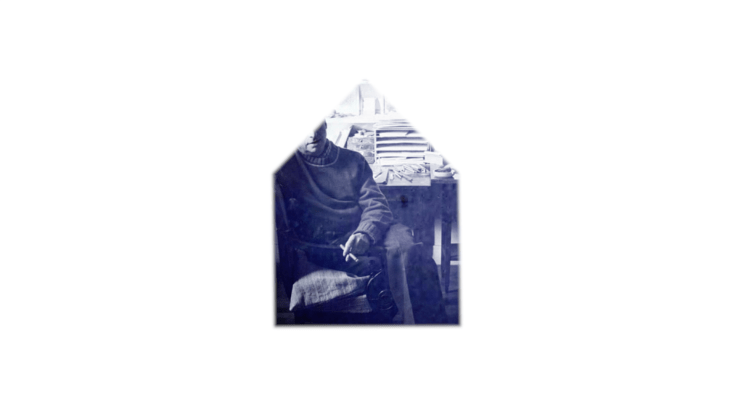
Productive Discomfort at Xpace Cultural Centre

By Rebecca Casalino

Xpace_Productive Discomfort_003
Productive Discomfort, 2019. Installation view, works by Jessica Watkin, Anne Ruccetto, Susan Blight, and James Yeboah in view. Photo credit: Polina Teif

March 1-30, 2019

Anne Rucchetto, Kaythi, Seiji, Susan Blight, Jessica Watkin,

Heidi Cho, and James Yeboah

Curated by Lauren Cullen

As part of Myseum Intersections Festival: Revisionist Toronto.


Women’s craft and labour is a topic explored in feminist circles, yet we do not see it often directly reflected in the mediums of contemporary artists’ practices. I myself am guilty of this, citing women’s labour in my own work, and comparing the repeated actions in my practice to sewing or knitting. Walking into Xpace and seeing Productive Discomfort for the first time I was happily surprised by bright colours and political discourse. This was not the women’s craft I had grown up learning.

Xpace_Productive Discomfort_004
Susan Blight, An Unwelcome Mat for these Times, Niwiiji Anishinaabeg, 2019. Photo credit: Polina Teif

One of the carpets that caught my eye hung from the west wall and had long trails of pink and red yarn streaming down from a rectangle emblazoned with an Anishinaabemowin phrase. The artist, Susan Blight, lifts the rug from the floor indicating to the viewer they are not easily welcomed by the artist. This challenge presented by Blight is delivered with an object filled with labour and embroidered with a language foreign to a settler audience. The anger surrounding Canada’s relationship to the Indigenous communities is felt in Toronto with protests supporting Wet’suwet’en land defenders gaining momentum and residents choosing to call the city Tkaronto, a Mohawk word meaning “where there are trees in the water”. Land acknowledgments have become the standard at gatherings to keep the history of colonial violence in our minds. This infusion of Indigenous politics into the urban settler mainstream discussion is long overdue. In my own primary and secondary education, the history of Turtle Island’s Indigenous peoples was a hasty stereotypical sketch of a complex culture the invading settlers refused to acknowledge. It was only in university, through my own course selection, I began to learn about the rich art historical canon of the Aboriginal, Metis and Inuit peoples. As settlers, we must pressure our institutions to engage with Indigenous voices so we can honour the flourishing communities on the land they cared for long before settlers landed here.  Blight’s refusal to lay down her welcome mat reads as a message to myself and fellow settlers that our presence is still not welcome, and our support is too little and too late.

Xpace_Productive Discomfort_010
Kaythi, Our Lady of Profound Failure, 2019. Photo Credit: Polina Teif

Our Lady of Profound Failure created by Kaythi was another rug that drew my attention. It’s deep red subject popped against the blue background. The rug had oranges and greens, woven as a kind of collage, dancing around the edges making the composition playful and fun. Visitors are encouraged to kneel on the rug; this made me giggle, thinking about kneeling in connection to prayer and oral sex. The rug pops with its bright colours and DYKES ONLY is written in bold black across a bent figure. The red distorted figure bends with its back arching along the top of the rug. This work claims space by welcoming an exclusive social group. Spaces reserved for ‘dykes’ are rare and usually very fluid, for example, The Beaver, a gay bar/café. I don’t consider myself a dyke, but I feel the word hooked into a rug allows queers like myself to be in on the joke.

Xpace_Productive Discomfort_009
Kaythi, Our Lady of Profound Failure, 2019. Photo Credit: Polina Teif

What interests me most about this exhibition is the dedication to labour and the dissemination of knowledge. For the exhibition, Lauren Cullen taught the artists how to make hooked rugs, a craft she has been practicing for nine years. This passing of knowledge without the platform of a classroom or the internet is labourious and intimate, creating an immediate community. I attended Cullen’s event at Xpace to learn how to make hooked rugs and happily sat at a table with a graphic design student, an architect, a jeweller, and a comedian. Cullen stood in front of the video projecting artists in the show making their rugs. Each of us peeked up at the video from time to time to compare our tiny squares to their work. Cullen came around to each table spending time with attendee’s offering them tea and cheezies. The room was filled with light conversation as everyone concentrated on their tiny rugs. Materials were spread across a table complete with leggings, shirts, yarn, and pre-sliced striped of cloth. At the end of the session, we were all hesitant to leave and crowded around Cullen to individually thank her for such a lovely day of bonding and making. Cullen’s practice seems to revolve around these kinds of exchanges and community building as she discussed with one of the participants her passion for “unlearning”. Artists from the show were also in attendance and sat at the tables with participants happy to talk about their experiences learning with Cullen for the show. Cullen created a learning environment of balance and calm.


Cullen uses “the social practice and conventions of rug hooking as a tool for critical education, grounded in anti-racist, anti-colonial and feminist queer crip frameworks” to replace traditional institutional and academic methods of teaching. In creating these ‘unwelcome’ mats Cullen leads artists Rucchetto, Kaythi, Seiji, Blight, Watkin, Cho, and Yeboah in their rug hooking practices to convey their own political narratives surrounding craft, textile works, and labour. Productive Discomfort engages with a myriad of political topics allowing each artist to harness textiles to hook their point of view. My relationship with textiles has never been so complex and politically engaging. As a child, I sat with my Nonna on the couch watching her crochet blankets and listening to stories about her younger more nimble fingers embroidering sheets, handkerchiefs, and pillowcases for her wedding chest. Cullen uses feminist theory and rug hooking to identify, “a significant site of matrilineage: a site of material culture gaining legitimacy through an inter-generational practice of passing down rugs and skills between women.” This summarizes my experience with textiles and shapes textile art in a feminist light allowing myself and other contemporary artists to engage with rug hooking on a new level. Productive Discomfort brings the conversation around textile arts into the conversation surrounding community, marginalized narratives, and women’s labour.

Dana Buzzee: The Coven on Her Back

016_PunishmentRituals_DanaBuzzee_LEFTContemporary
Punishment Rituals, installation view. Dana Buzzee. 2019. Size varies. Courtesy of the artist and LEFT Contemporary.

Punishment Rituals

LEFT Contemporary March 1-May 4, 2019

By Lucas Cabral

I walk in and I get a little excited. This excitement has been growing with every image the artist and LEFT Contemporary have posted of works and installation progress leading up to the opening. The imagery and energy are something I’ve been looking for (and missing) since I moved from my Toronto-adjacent hometown whose proximity to Toronto’s queer density granted me easy access to bondage and fetish communities and their meeting spaces. Is this excitement the effect of the spell cast by Buzzee’s work? Or is it evidence of my newfound curse?

Why not both?

The constellation of works making up Punishment Rituals forms a warm entanglement of community and queerdos spanning generations and geographies. Buzzee has inducted viewers, makers, participants, and their predecessors, materializing them in studded leather collars and cuffs, a wide-cast web woven of leather and chain, and prints retelling possible engagements of these or similar sculptural works, all of which in this space cast a circle around an a-frame and knot of nylon rope.

005_PunishmentRituals_DanaBuzzee_LEFTContemporary
Punishment Rituals, installation view. Dana Buzzee. 2019. Size varies. Courtesy of the artist and LEFT Contemporary.

Hand-pulled images of rope and leather-bound performers on newsprint reference and resurrect community-based erotica like that found in publications like On Our Backs, the first women-run erotica magazine that featured lesbian erotica for a lesbian audience. Images are captured when Buzzee opens calls for community members to perform freely with the leather works she makes. Groups, pairs, and strangers, bond over a shared bondage experience. Buzzee captures these moments of liberation, exploration, and connection, offering the images as a part of an incantation. Like with the previously mentioned On Our Backs publication, Buzzee continues a legacy of by-and-for community erotica. An exhibition poster with exhibition text by Taylor Harder has a likeness modeled after On Our Backs and chronicles the development of and differences between British and North American traditions, making note of the ways that intimacy is an activator during initiation.

The exhibition reclaims the formula of ritual witchcraft initiation ceremonies, making space for homoeroticism which is rejected by British traditions (heavily informed by the legalization of witchcraft preceding the legalization of homosexuality in Britain), and taking up traditional initiation elements like blindfolds, nudity, bondage, and whipping not adopted by North American traditions.[1] In Punishment Rituals, artwork takes the spot of coven members who typically circle the initiator and postulant during the ceremony. These stand-ins are embedded with the energy of those who have been a part of their making. Buzzee engages community members who are also artists, writers, printmakers, leatherworkers, arts administrators and peers in their production. With the intention of initiation being “spiritual rebirth into new identities and new communities,” Buzzee sets the stage for those possibilities to be impacted by queer-femme homoeroticism.

001_PunishmentRituals_DanaBuzzee_LEFTContemporary
Punishment Rituals, installation view. Dana Buzzee. 2019. 9′ by 9′. Courtesy of the artist and LEFT Contemporary.

The show, the space, and it’s making reflect the collective queer mobilization that’s taken up out of necessity to meet the needs of one’s community that aren’t satisfied or even acknowledged by the heteronormative structures that dominate our spaces. As we pay more attention to the disappearance and lack of queer spaces especially for femmes (even in bigger cities), it is important to celebrate the perseverance of those who dedicate their time and energy into producing space and opportunity for their community to gather and engage. In connecting community members with the knowledge, perseverance, and legacy of those before to produce the various elements of the show, Punishment Rituals penetrates communities past and present and binds them together through webs of leather, chain, intimacy, and possibility, creating an opportunity to find community and affirmation, and to reflect on the ongoing task of collective queer organizing and reclaiming.


[1] Harder, Taylor, Art Thou Willing to Suffer to Learn: An Analysis of Witchcraft Initiation Rituals, 2019.


SPRING/BREAK Art Show: Spiritual Art Advisory

Installation
Spiritual Art Advisory, photo via Samuel Morgan Photography

By Chloe Hyman

On March 5, SPRING/BREAK Art Show descended upon 866 United Nations Plaza, where it will remain in all its tangible, technicolor glory until Monday, March 11. Held annually during Armory Week in New York City, the show challenges the exclusivity of the art fair, providing no-cost exhibition space to emerging and established artists and curators. Its transformation of corporate and government space— this time at the United Nations, the dictionary definition of ‘government space’— is a sharp commentary on the underlying societal institutions that support an exclusionary art world.

IMG_6892 (1)
Sarah Potter and Caroline Larsen, Photo by Christos Katsiaouni

Experimental art and curatorial practices always abound at SPRING/BREAK, but one particular exhibit caught my eye this year— the divinely opulent “Spiritual Art Advisory,” curated by Sarah Potter and Caroline Larsen. The 22 featured artists in this exhibition have all contributed a work inspired by the Tarot’s Major Arcana, and their responses vary in medium and tone. Equally present in the space are the curators, Potter and Larsen, whose roles are not so easy to define. They are both exhibition conceptualizers and spiritual guides, inviting the viewer to engage spiritually with the works and to question Tarot’s magical potential. I spoke to them about their unique curatorial approach. Below are excerpts from our conversation:

Chloe Hyman: Sarah, tell me about your journey into magic(k) and your experience in the art world. What is your background as a curator?

Sarah Potter: Since I was a child, art and magic(k) have always been a part of my life. I have tried to run away from it but it always pulls me back in… I honestly cannot even imagine my life without these two important elements in it every day! I have a background in gallery work and event planning, so as the art world has evolved I have enjoyed evolving my business with it. I love curating experiences for visitors, connecting collectors to artwork that thrills them, and creating ephemeral experiences that last a moment but stay with a visitor forever. 

CH: And Caroline, What is your background in the art world and your connection to Tarot?

Caroline Larsen: I am a painter and I also love to curate exhibitions! I am attracted to Tarot because of the beauty of the decks. Each deck that I looked at [while] doing research for the show was so beautiful that I wanted to make my own card and invite artists whose work I love and admire to make their own as well.

CH: How did you select the artists for this exhibition?

CL: Sarah and I worked on the list together. Some of the exhibiting artists have a tarot practice and others do not, but their work lends itself to the theme. It was really interesting to see how abstract artists interpreted the cards.

CH: How do you see the individual works as existing in dialogue with one another?

CL: Each artist picked a piece of work from the Major Arcana so we hung the exhibition based off of the order of the cards in the deck. All the work in the exhibition is so strong and so different that each work can stand on its own, but they work so lovely as a set too! 

SP: Every artist really brought it, and I am so incredibly proud of how it all came together. Group shows can sometimes be chaotic or challenging, but this feels really harmonious and balanced.

CH: And are the artists all femme-identifying?

SP: There is a diverse mix of artist perspectives here. We didn’t set out to do an all-women show, we just wanted to show the highest quality work for our curation. I do not believe in curating all-women shows, [as] it feels a bit reductive, but I am drawn to a woman’s perspective and it’s important to me to provide a platform for women, now more than ever. I am not going to exclude men from my curatorial conversation in order to heighten the work of women artists. I honestly do not see how that is helping anyone. I just want to show the best quality of work!

CH: I realize my assumption that your exhibition centered femme artists comes from the fact that I only know womxn who practice magic(k). Why do you think womxn are so drawn to magic(k)?

SP: Witchcraft is intuitively guided, and I think women naturally tap into that energy more easily because of our societal constructs.

SP: Lala Abaddon really flipped the script on gender with her portrayal of the emperor, the card that embodies masculine energy. She chose to depict her emperor through a nude self-portrait! It’s a very powerful piece. 

Emperor
The Emperor by Lala Abaddon

CH: I love the way Abbadon’s Emperor is hung between Langdon Grave’s Empress and the wall. What might originally have been a feminine/masculine dichotomy is muddied, the latter taking ‘masculine’ blue as its central hue but centering the female form. What emerges from that new relationship feels really pure, like the essence of each card has been removed from the gendered hands of history. 

The relationship between these two works points to the exhibition’s strong curatorial presence. In many shows, the curation is felt rather than seen. The casual viewer may pass through and focus exclusively on the artwork itself, not considering the impact of space on the exhibition as a whole. But you are using the work of these artists to engage with visitors regarding their own spiritual needs. Your voices as ‘curator-healers’ are very noticeable in this relationship. Would you agree with this interpretation?

SP: I do agree! Thank you, you nailed it. I feel like the curator is almost the narrator of the story, curating the space and directing the flow of energy in the room through the selection and arrangement of the work. Each piece should enhance the overall story and add to the visual dialogue with a strong point of view.

caroline_larsen___-1552178889810
The Empress by Langdon Graves

CH: Is visitor participation often a key element of your curatorial practices?

SP: Being an artist can be very solitary, [with] long days in the studio laboring alone. The work needs other eyes on it—it needs to be displayed and experienced by others. Once viewers can experience the work, the circle is completed and the work and its intentions is fully realized.


CH: Participatory art is definitely a strong theme here. What do you like about SPRING/BREAK? Have you ever exhibited or curated an exhibition here before?

CL: SPRING/BREAK is a pretty dynamic fair! It’s always moving to new locations and you never know what you’re going to get. I have shown work there as an artist twice, once at the post office location and once at Times Square. I have curated twice, once at Times Square and now at the UN Office.

SP: I love SPRING/BREAK! This is my third time curating an exhibition for this fair and it keeps getting better and better each year. I love that the [emphasis] is placed on curatorial concepts and radical vision. You feel it throughout the entire space. Ambre and Andrew have done an incredible job fostering such a creative environment—that authenticity is felt. My clients always tell me it is their favorite fair to collect work from and visit every year. Of course, that makes me happy to hear, too.

CH: What do you hope viewers will take away from the exhibition emotionally, spiritually, and intellectually?

SP: I hope viewers enjoy contemplating the imagery and symbolism of each card’s archetype and the way the artists interpreted each card. Playing with the fair’s curatorial theme of “Fact and Fiction,” I hope that viewers question the role of the Tarot and consider whether it has the divinatory ability to transcend realms and offer a magical peek into their own future. 

* * *

Inspired by my conversation with Potter and Larsen, I decided to embark on my own spiritual journey within the exhibit. I chose four works that really spoke to me as if I’d drawn them from the deck myself. Then I spoke to each artist and allowed their words to inform my…potential destiny.

caroline_larsen___-1552178903306
Justice by Kate Klingbeil

I started with Kate Klingbeil’s interpretation of Justice, which utilizes black sand, acrylic, watercolor, and vinyl to depict a winged Justice presiding over the people. Her body language is contradictory; while her left-hand rests gently on her breast, her right clenches an anthropomorphic sword. Tiny naked human figures dangle from the scales of justice, falling to the murky violet depths below. All the while she looks on peacefully, her eyes downcast, a small smile on her lips. Her serenity is opposed by an ominous eye, the whites of which are tinged a sickly pink, that ensnares the viewer’s gaze.

“I chose the justice card because it offered me a chance to meditate on balance and truth,” Klingbeil says. The artist based her depiction off the imagery in the Serravalle-Sesia Tarot—a late 19th-century Italian deck—but the swarm of tiny people climbing Justice are her own addition. They heighten the significance of the deity’s serene expression. “She remains unphased,” Klingbeil explains. Because she remains calm despite the tumultuous scene below her, “we have to believe that truth will prevail.”

caroline_larsen___-1552178913750
The Star by Margot Bird

 Next I pulled the Star, interpreted by Margot Bird with acrylic paint, epoxy putty, and gold leaf. I was drawn to its kitsch factor, the way aliens, poodles, and pastel hues could someway come together to create something that registers as divine. I fully believed in the existence of these poodle-human hybrid creatures, and I acknowledged that they danced beside the sun, pouring stars to the whirlpool below. Perhaps the sheer abundance of pastel hues created a strange cohesion that rendered itself supernaturally Other.

Or maybe Bird has translated the essence of the truly divine Star into something comprehensible for the human mind. “I feel like [The Star] represents bursts of creativity, inspiration, and optimism,” says Bird. She emphasized anything that passed through her mind that felt new and untouched, like “those feelings of sudden inspiration and positivity.” The inclusion of aliens speaks to her strong desire to share, and so these creatures receive cups of star water, receiving the creativity and happiness she feels inside.

Hibapng
Strength by Hiba Schahbaz

Third I chose Strength, depicted with grace by Hiba Schahbaz. In this mixed-media work, crafted with gouache, watercolor, gold leaf, and tea, a woman sits nose-to-nose with a lion, naked as he. The serenity of both creatures feels a bit ambiguous. Perhaps the woman shows strength to sit so calmly with a predatory carnivore. Or maybe the harmony of the two beings engenders a different kind of strength, a power not measured through action or brute force, but through connection and understanding and taking the time to find peace and resolve differences.

“I love the harmony between the lion and the lady,” says Schahbaz. “It gives me a feeling of being connected to my best self. There is no fear, just perfection.” The artist’s words suggest the lion as a kind of self-portrait, a reflection of the inner self as a powerful lion, strong yet never impulsive. “A sense of protection, perseverance, grace, and love,” she adds.

Jen Dwyer Temperance _5
Temperance by Jen Dwyer

Lastly, I come to Temperance, sculpted by Jen Dwyer, whose ceramic contribution to the deck exhibits similar dichotomies of darkness and lightness. Her ornamented black vases are humanoid, black hands emerging from the clay to tighten around their necks. Or are they resting gently in a soft embrace? The presence of rope winding its way around the bodies of the vases suggests the former, but there is something very meditative about them nonetheless that suggests peace.

“The temperance card is all about balance, which I interpreted as a form of self-care,” Dwyer explains. “I’ve been thinking about the Audre Lorde quote, ‘Caring for myself is not self-indulgence, it is self-preservation, and that is an act of political warfare.’” The artist’s words reinforce the presence of both tension and peace in her work. What strikes me is the agency the hand represents in deciding whether it will be used for self-harm or self-care. “I’m definitely pointing the finger at myself,” she says. “I could get a lot better at taking some space from the studio.”

SPRING/BREAK is open through Monday, March 11th. Stop by E25 to ponder your own future. Sarah Potter and Caroline Larsen will be close by if you need a spiritual guide.

Photography, Collage and Nostalgia: An Interview with Foxtrapped

Collage 2
Foxtrapped, Untitled Collage 01 (That Photo I Stared At Every Time). 2018. Archival Inkjet Prints and Found Photographs on Masonite.

Questions by Adi Berardini

When I first saw two large-scale collages by Brit Moore-Shirley, otherwise known as Foxtrapped, I felt nostalgic for moments I’m not even sure exist. The collages, pieced with pastel colours and childhood photos, made me feel a sense of freedom like driving down a highway with my hair tumbling in all directions. I remembered the time I should have kissed someone in a parking lot with slick streets from recent rain. These nostalgic feelings are too often related to temporary freedom or pangs of sadness and regret.

Foxtrapped is a young emerging artist from London, Ontario, currently undergoing studies at the Nova Scotia College of Art and Design in Halifax, pursuing a BFA in interdisciplinary studies. Brittany’s process has grown quickly into an interdisciplinary (post-medium) practice that relies heavily on elements of photography, collage, and installation, alongside sculpture and ceramics. They came out of the closet when they were 17 and have since utilized their position as a visual artist to encourage a dialogue about narratives and lived experiences that are often overshadowed and overpowered by louder more dominant voices. They hope to provide an opportunity for the audience to allow themselves to empathize with these voices and narratives that are often ignored and are commonly scraped from history.

  1. I find that your work is rooted in nostalgia and some pieces seem tied to childhood memories. Can you further explain the influence of nostalgia on your work?

While I do consider nostalgia to be a part of the conversation surrounding my work, it’s never what I think the conversation is primarily about. Nostalgia, this longing for a return to something, is an exploration mostly through the media; it has a very direct relationship with nostalgia. This is because I’m attempting to document my own history (whether that be personal family history or the history of the various aspects of my identity). The usage of these traditionally nostalgic items is more to analyze than to convey a homesickness or a sentimental yearning for that which was. The items I’m using are done so to displace nostalgia and displace the associations we have with items and memories from our past rather than yearn for them. I want to create a conversation that places those of us with a past we find difficult to navigate, at the forefront. Susan Sontag has this quote from As Consciousness Is Harnessed to Flesh in which she writes: “My loyalty to the past – my most dangerous trait, the one that has cost me most”. To me, nostalgia seems neither good or bad but rather a very delicate and potentially volatile idea. We frequently assume a nostalgia for childhoods or our pasts and I find myself wanting to create from an analytical position that challenges this.

Additional Image 3
Foxtrapped, Still from Home (Searching), 3:03, 2018. Experimental Film, Found Footage.
  1. In your work Queer Ephemerality, you address the fact that home is not a queer concept but one rooted in patriarchy. I found this work incredibly moving, especially since a large percentage of homeless youth are queer. Can you further explain this piece?

Queer people have this very interesting relationship with the idea of home and I started realizing that a lot of queer media centres around that exploration. Of course, the obvious queer relationship to home is one that shifts and may possibly fracture when we start coming to terms with our identities and whether we decide to come out or stay closeted – it’s so much more complex than that. The environment we’ve created wherein queer people have to come out, also means that we’ve created a society where queer people don’t frequently have the privilege of aspiring towards home, both in the classical idea of that term (a nuclear family) and the comforts it brings (security, love, safety, support, etc.). In so many ways, we are exempt from this possibility and we function in this state of homelessness. So, even if our trauma isn’t strictly related to being kicked out of or escaping from a family home, home is still really difficult to navigate as people who exist outside of the patriarchal, heteronormative, and cisnormative ideas of this ‘happy ending’: bury your gays tropes, lack of meaningful representation, the closet, and inadequate legal systems all contribute to this homelessness. Queer people routinely seek alternative homes, places that tend to be temporary. We find these in other people, in community centres, in spaces that are set aside for being queer, or in any possible narrative that presents happiness as a queer option.

My hope is to present queer people (specifically queer youth) with the various possibilities of home – so that while we’re mending the harm caused by the patriarchy and cis/heteronormativity we can still find comfort, safety, security, and love in our own ways.

Childhood Inastalled 1
Foxtrapped, A Childhood in Pixels: The Place On My Mother’s Sweater Where I Rest My Head. Scanned Analog Photographs, Archival Inkjet Prints, Acrylic on Wood. 2018.
  1. In your work A Childhood in Pixels, you use abstracted childhood photos that are reduced to pixels with subtle variations of colour. Can you further explain this work?

This is a good example of my attempts at documenting and deconstructing my own history. Family photo albums are these amazing objects — almost everyone has family photos and so they’re this incredibly accessible object. They often hold so much importance to us as individuals but they mean nothing if they’re not yours. The clarity of the image becomes pointless. At no point in these pixelated photographs does it matter if you can see my father and I’s feet in the sand when I tell you that’s what the photo is of. [Consequently], you are asked to bring your own experiences and relationship to symbolism to the work. Each print is part of a photo from my childhood, I’ve isolated the parts of the photo that sticks out to me – the punctum. I further this by asking the viewers to hold the voxels (a 3D pixel) placed on plinths in front of the photographs in their hands. Each voxel is painted to match a pixel within the print, making the photograph physical and pairing that with the trust of asking my audience to hold something that is so ephemeral and fragile in its relationship to myself.

Just a Photograph
Foxtrapped, Fatigued Nurse. Found Imagery, Photo Collage, 2018.
  1. Your work addresses queer (in)visibility and the lack of empathy towards the queer community. What first inspired your series, Look Who’s Really in Pain, about the lack of empathy and objectification of HIV/AIDS patients?

Three months before I was born my Uncle Steve took his life after a lifetime of abuse from our family – I’ve slowly started uncovering his life and collecting the few remaining pieces of him – the horrendous obituary and the only photo of him I could find. I want to protect him. I feel the same regarding those who were directly and indirectly impacted by the AIDS crisis of the 80s and 90s.

There’s this huge gap in queer history, you can read so much on how we practically lost an entire generation of people and AIDS survivor syndrome has altered the rest. Yet so many of us don’t know this history —and certainly not as well as we ought to. This generational gap is scary because it means we have less ownership of our history and history in our current world comes with a sense of belonging and the right to our identities. Somewhere along the lines older queer people and younger queer people stopped communicating. We, as a community, survived the AIDS crisis of the 80s and 90s because we fought for and with our lives. Their deaths are the reason I have the privileges I have today, yet so much of that history suffers from being rewritten with a hetero/cisnormative bias. Now it frequently serves to give fame to the straight and cisgender people who were empathetic to us. These pieces largely stem from that frustration. I am extremely protective of our history. These people who had so much taken from them: if their stories aren’t being told truthfully, they are being used as pawns to sell this completely false narrative about how painful the AIDS crisis was for straight people – I want to undo this. Disrupting the imagery serves to relieve them of their indebtedness to this false history. In the end, drawing direct attention to a washed over history, protecting them from these lies, and stitching queer narratives back together.

  1. Who are some artists you find influential?

I have had the privilege of being surrounded by artists I truly admire and gain inspiration from so I’d like to mention some of them as well as those I’ve come to know through research, so in no particular order and from no particular time: Felix Gonzalez-Torres, Kiam Marcelo Junio, Robert Mapplethorpe, Roland Barthes, Susan Sontag, Annie Leibovitz, Claude Cahun, Hank Willis Thomas, Lynn Park, Brooke Tomlinson, Brody Weaver, Monica Joy Peeff, Madison Powers, Jeffrey Heene, Julian Miholics.

  1. Where do you see your art practice going in the future?

So much of my work depends on an understanding of contemporary assumptions that we make, I look forward to the day when the work I’m making now becomes contingent on its history and setting. There will be a day when people look back and have to remind themselves of the assumptions we used to make because we’re no longer making them. That will mean things have changed for the better, and I can move on to critiquing some other system in place and helping these changes continue to grow.

Sorry, I’m Busy: The Meticulous Art of Capricorns

Support Project Space

December 22 – January 19th, 2019

51251539_302907963697536_1885132111959031808_n
Sorry, I’m Busy, 2019. Installation shot courtesy of Support.

By Adi Berardini

If you’re a Capricorn, chances are we’re compatible—both Earth signs, something about our qualities match up well. As a Virgo, I am analytical, practical, and dare I say, I have an unruly habit of worrying about everything and working non-stop. Perhaps we get along well based on our shared anxieties.

Sorry, I’m Busy is an exhibition of Capricorn artists that looks at the relationship between artistic connections and work ethic. Curated by Tegan Moore and Liza Eurich, they shared the challenge of curating a show so seemingly random since the main commonality is based on the time of year the artists were born. However, the string that ties the work together is the shared qualities that Capricorns are said to possess—ambition, practicality, wisdom, and pessimism, to name a few. There are also a few recurring themes such as the use of fruit as a subject matter, humour, memory, and the imagery of a page turning. The exhibition seems paired down since it consists of smaller works, but its strength lies within the context of the work and how it demonstrates the artists’ personalities as distinctly Capricorn.

IMG_9312
Sorry, I’m Busy, 2019. Installation shot courtesy of Support.

Pessimism and Humour

The collage work Flip Off (2018) by Maryse Larivière is comprised of two main elements—a middle finger and a lovebird against a millennial pink background. It could be interpreted that the work is giving the middle finger to a catcaller, or perhaps the patriarchy itself. Perhaps, the middle finger is towards the unrealistic expectations put on women altogether.  Further on, haphazardly placed at the top of the stairwell, Water for America (2018) by Anna Madelska consists of a white fur patch and a crumpled poster. Madelska references the distribution of wheat-pasted posters used for political propaganda or advertising. This piece is quite cheeky as well since the cliffscape poster appears to look like two legs spreading—the placement alludes to looking up a skirt. She is also flipping off someone in a metaphorical way.

The sculptural work KFC by Kotama Bouabane displays this sense of Capricorn humour—the sculpture reads as a pile of materials stacked on the tile floor. The neon reflection on the black and white materials evokes a piece of technology with its streamlined rectangles; I immediately read it as an Ipad. However, at a second glance (and perhaps by reading the name KFC), one can infer that there’s a plaster cast piece of deep-fried chicken sitting on top. What appears to be a lime green painted piece of wood is, in fact, a stack of napkins.

IMG_9314
Polvos, Susanna Browne,2017-2018. Installation shot courtesy of Support.

Need for Control

A quality distinct to Capricorns, so I am told, is a need for control in long-term relationships. In the inkjet print from the series Polvos, Susanna Browne uses the imagery of a chameleon on a horseshoe from a label on a Mexican love potion that gives you the power to control your man. Sounds pretty useful in all honesty. I propose that another Capricorn quality is resourcefulness.

Control also is conveyed by the second work by Kotama Bouabane, with Stereo Quality Photo Finishers. 1989. Hong Kong (2018), the print of a fruit still-life pinned to the wall with a jet-black chopstick. At the bottom, the illusion of the flipped page reads “Kodak.” I read this piece as re-establishing representation when it comes to the typically euro-centric painting trope of a fruit bowl. This particular fruit bowl image originated from a book produced in Hong Kong. Reflecting on the means of production, Bouabane is interested in the production of the paper used for printing. He explained that he visited different paper manufacturers in Japan and Germany: the Japanese factory was more traditional, whereas the German factory was driven by man-made machinery. The idea of copying and circulating imagery and the importance of cultural context as it relates to reproduction is explored.

IMG_9294
Sorry, I’m Busy, 2019. Installation shot courtesy of Support.

Wisdom

The Capricorn is said to be the wise sign of the zodiac. This wisdom is demonstrated through the sound work by Niloufar Salimi, how she remembers it (2018). Both poetic and wise, this haunting work transformed the space. In the audio Salimi explains an early memory described to her of a grandmother singing to calm a two-month-old baby’s crying. On the small shuffle iPod, a voice singing a lullaby in Farsi travels through the listener’s eardrums. The lack of accuracy and subjectiveness of memory is addressed since later on, the story that was explained to her was denied by the same person. The painting hung on the door by Kim Neudorf also addresses the theme of memory—the neutral, earth-tone colours bleed together alluding to a figure. The sensibility that it’s painted in seems like a foggy memory itself, like trying to recognize someone from a dream without being able to pinpoint them.

Additionally, the piece by Shane Krepakevich seems to look towards a higher power for wisdom— the print The Book of Sand, p. 19, 022 (2018) addresses space and philosophy, the name referencing a short story by Jorge Luis Borges about the protagonist getting lost in a seemingly infinite “Holy Writ” book and attempting to escape impending infinity. The work parallels the similarities between light, space and the beating of the blood in one’s arteries. Whether or not you believe in astrology, it’s nice to think of constellations like threads binding us together by our shared qualities.

The loneliness factor (2016), a film by Aryen Hoekstra, also draws a parallel to space and the extra-terrestrial. The black galaxy background is like an ink void spilling endlessly, the planets are blips of light shining through. Suddenly, a metal oscillating calendar appears in the corner resembling a spinning globe. The hypnotizing video reflects on post-war space exploration that attempts to search for the unknown, trying to determine if there’s potential for more life out there. Analyzing the positioning of the globe in correlation to the rest of the galaxy, it projects what life could be like in the future when there are only remnants of humankind. Even on a planet of over seven billion, we’re still surrounded by the vastness of it all. 

Parallel to the video in the basement, Loadout (2018) by Jonathan Onyschuk has a curious texture and materiality. The work consists of a table formed of thin aluminium that appears to be made of painted crumpled paper. Formed from WW1 barbed-wire and named after a shooter game, it references a similar post-war theme to Hoekstra’s film. Placed on the table, two melted silicone spines lie inside a styrofoam pit. It seems to allude to the collective trauma of war and violence embedded in identity, although the reception of this piece showed that its meaning got a bit muddled. Sometimes you have to embrace the unknown.

IMG_9276
Maquette for Unrealized Monument, Trevor Mahovsky, 2013. Installation shot courtesy of Support.

Meticulousness

The Capricorn is known for being meticulous, which is portrayed in the work Maquette for Unrealized Monument by Trevor Mahovsky. The work is a maquette for a brushed-bronze apple with a detail-oriented rendering of a bee resting on top. The sculpture has an environmental undertone, creating elevated importance towards bees as pollinators. Whenever I see a bee, I associate how their hard work as pollinators is diminished; their population dwindling. Like the bee, the Capricorn is also hard-working. The attention to detail in the bee at this minuscule scale displays their meticulous effort—always down to the last detail.

I believe in horoscopes since, at least for me so far, they have yet to be proven wrong. Sure, maybe I just see the truth in what I want to believe, or they are obscurely written, or maybe I refuse to live in a universe that is completely random. A dice game will demonstrate that there is some predictability behind probability. After all, there must be similarities between us somehow. It’s poetic and comforting to think that we’re more alike than different based on a common factor. The beauty of Sorry, I’m Busy is uniting through art to celebrate Capricorns and their distinct qualities. This is wonderful because if they are anything like their fellow Earth sign, the Virgo, they’ll forget to celebrate their accomplishments, too busy looking towards their next goal.

Refrain / Reframe: I Learned I Had A Body by Vivek Shraya

By Maeve Hanna

Saag_00018
Vivek Shraya, I Learned I had a Body, 2018. Installation photo by Jaime Vedres Photography courtesy of the Southern Alberta Art Gallery.

Trigger Warning: This text reviews work by the artist, writer and musician Vivek Shraya which deals with suicidal ideation. 

Please god, don’t let me wake up.

A repeated refrain, spoken over and over, awakening in the viewer anew the realization of what it feels like to have no hope.

Can the desire to die be inherited?

One among many, or few, seldom questioned, tumbling out of mouths, written, spoken, voiced. A different kind of intergenerational trauma.

It’s just a number / it’s just a body / it’s just a life.

Is life only relatable to a number, as if it is a giant paint by number, one colour per year, fading away from one hue to the next?

These are some of the refrains that echo through Vivek Shraya’s hauntingly powerful video work I Want to Kill Myself. No shying away from the topic at hand —suicide: no shame; no hiding. Shraya unabashedly opens herself wide like an oyster pried free of its shell and allows us to sit with her and her emotions. It might be uncomfortable. We may squirm and wriggle. We may want to escape but her arresting voice, her gaze, holds us steady. The red lines of her tattoos draw circles around us, keeping us still in our place.

Saag_00016
Vivek Shraya, I Want to Kill Myself, 2018. Installation photo by Jaime Vedres Photography courtesy of the Southern Alberta Art Gallery.

Her words slice through the air with a force that is both brutal and tender in its tenor. The ferociousness of her words reaches the depth of our spirits as we sit humble and vulnerable with her, listening to the darkness she has faced—although a delicateness is evoked. Swimming through the imagery and verse, tying the two together as the text and images converse and the viewer passively eavesdrops on this conversation, the viewer becomes an intimately connected third member.

I Learned I had a Body is the body, but more than the body, it is the alienation from one’s body in a society regimented by heteronormative and patriarchal systems. Shraya, being a trans woman, has learned, as one of the lines from I Want to Kill Myself, suggests “… I had a body through your condemnation of my body,” understanding the body and, in particular, her body through various relational means.

Referencing a relationship to the sacred, the familial, and other relationships that emerge in life, Shraya battled with her own acceptance of her identity and body as well as how others saw her, looked at her, gazed upon her. With the video/photo essay  I Want to Kill Myself, The viewer is placed in a realm of watching, gazing passively and absorbing her visage and the armature of her being while simultaneously hearing the haunting experience of suicidal ideation and deep depression. More people than one might realize relate to this work. However, Shraya revealed in an interview how touched viewers have been by it, “The work was launched on my birthday last year by CBC Arts and it had a tremendous response from the public. It was really powerful for me. What was surprising though were the comments from people I knew. It was a strong reminder to be conscious that what we see is not always the truth and that these are important conversations to have.”

Recitation like resuscitation from walking into the lake, the great lakes, (maybe it could be): Walking into water, like the great great lakes, a recitation similar to the resuscitation of the authorly tradition, as Shraya suggests recalling Virginia Woolf’s last moment on this earthly plane. But at the age of thirty-five, her resolve seems to change, her vision shifts. The red lines loosen their grip, the letters she writes, those lines of words drawn out in tendrils unwind themselves and drop off the page as if they never existed. The story ends at the age of thirty-five. But not with the taking of a life —but the resolve to live a life.

I wanted to kill myself at thirty-five.

            Shraya says again, but this is the last. In the finitude of this remaining stanza, the writer names how she came to this finishing moment. Like Virginia, but not. She names out loud, speaks the words clearly, vocalizing it to those who love her the most, allowing her to get the level of care she so desperately needed. I Want to Kill Myself names her pain. In so doing, Shraya releases some of the hold and power her pain held over her. Equally, in so doing as she states, kept her alive. In saying she no longer wanted to be here, naming this deep, guttural form of pain, Shraya aided herself in living, remaining, finding love and hope where there had been none.

Shraya wrote her suicide notes in red, the colour that adorns her skin, the colour of our life force coursing through our bodies.

We wear our scars proudly.

We bear witness to her pain and triumph in being present with this piece.

This work takes a kind of courage not many individuals possess.

Red on red, words on words.

Red on red dress.

Saag_00011
Vivek Shraya, Trisha, 2018. Installation photo by Jaime Vedres Photography courtesy of the Southern Alberta Art Gallery.

Equally moving is Trisha the accompanying photo essay in I Learned I Had a Body. Here Shraya recreates photos of her mother by presenting herself as her mother. She speaks in her text to the overwhelming desire to escape her own body, that which literally resembles her father’s, and to make her mother, the matriarch of the family happy and proud. She suspects that her mother always wanted a girl but prayed for two boys to give them a better life, one without the suffering, ridicule, pain and disadvantages that come with being a woman. In Trisha the artist reveals another instance where the body comes into play – adorning herself playfully in all the accoutrements from the chosen photographs, Shraya masterfully mimics the original image, creating a mirroring effect both literally and metaphorically, revealing how she “…modelled [herself] – my gestures, my futures, how I love and rage – all after you,” her mother. She revels in the joy that her mother had felt as a woman prior to her immigration to Canada and becoming a mother and wife and muses about how she can live that out on her mother’s behalf now as a trans woman. Perhaps one of the most stunning images in the series is a photograph of Shraya and beside it, her mother, lying supine on a reclining chair mirrored within the image as if seen through a kaleidoscope. Repeated upon itself it’s a joyful revelation in celebrating womanhood. Dazzling in red, enjoying the sunshine, Shraya and her mother arrestingly hold the audience’s gaze.

Reading I’m Afraid of Men in tandem with this exhibition brings the theme of the body throughout Shraya’s work into clearer focus. Throughout her latest book, Shraya highlights the ways that her body validated and also betrayed her and her identity. In one instance Shraya observes how she studied men in order to portray herself as more masculine:

Consumption is a key to masculinity. … I lift weights, all the while reprimanding my body for not conforming, for never quite looking buff or white enough. What would my body look like if I didn’t want affection from gay men and protection from straight men? What would my body look and feel like if I didn’t have to mould it into both a shield and an ornament? How do I love a body that was never fully my own? (31).


While the book focuses on the fear of the male sex, this instance where the body emerges refocuses how internalized our vision understanding of our bodies can become. Shraya reveals in this excerpt how displeased she is with her body, how she feels about accepting it in all its realities. What becomes compelling is the observation of how Shraya comes to accept what she has seen as flaws within herself and finds courage therein. Writing this review as a queer white woman, I am at a disadvantage of deeply understanding the trauma this instance, among others she recounts, inflicted on Shraya. However, bearing witness to and acknowledging her story by being present and allowing this work to take the space it needs within me and the gallery space provides a platform for this necessary dialogue.

Saag_00013
Vivek Shraya, Trisha, 2018. Installation photo by Jaime Vedres Photography courtesy of the Southern Alberta Art Gallery.

The compelling presence of words in this exhibition is not to be overlooked. I admitted to Shraya that I knew her primarily as a writer, while she sees herself first and foremost as a musician. Language and narrative present themselves as the foremost forms of expression for her. This is not to say the work requires the accompanying narratives, but more so that the work is activated by it, that through language Shraya is able to build a visual and auditory experience for the viewer.

Shraya offers a forum and platform for having critical yet tender conversations, for providing a space to be vulnerable, to be uncomfortable, yet acknowledge it, to push ourselves a little, to attempt to understand the limits of hope and despair, love and unconditional kindness. It is an offering to those who have struggled, who have attempted or contemplated suicide, who have been down that dark road. It demonstrates that even in the darkness, there is a light. And as a friend has said to me, it is when you hit the ocean floor that you are able to push yourself back up to the surface. Shraya’s hand is there as an offering to help you step out of those icy waters.

Bridget Moser: Prop Comedy & Consumer Anxiety

bridgetmoser_2
Bridget Moser, Season of the Witch (2016). Photo by Yuula Benivolski courtesy of Doored.

By Alexandra Bischoff

We live in a society of spectacle where our dreams are often wrapped up in consumer realities. Sparkles and sequins are not practical, but they do catch my eye. “To post or not to post,” but I graze on social media—and their targeted ads—compulsively. Fuck Nestle, but I do miss eating Häagen-Dazs. And neoliberal feminisms got me thinking, like, “I need a new lipstick to be a strong woman.” Some days this feels true. My ideal-I is only the proper shade of violet away.

A few things I would buy as a performance artist if I had unlimited funds:

  1. Several zentai suits in various metallic shades
  2. “Egg Sitter Gel Support Seat Cushion as Seen on TV”
  3. A customized neon sign that reads “a muse me”
  4. Plane ticket to France, so I could take a selfie in front of Victorine Meurent’s grave
  5. 1000 copies of the book “Rosa Luxemburg speaks”
  6. 1000 lbs of butter, in sticks
  7. A large filing cabinet

    butterstick
    Western-style butter.Steve Karg via Wikimedia Commons.

When I explain Bridget Moser to people who aren’t familiar with her work, I first call her a prop-comic because of her use of objects (Marcel Duchamp would love her for her candid use of the ready-made). Then I describe her comedy as awkward because her jokes are always wrapped up in some form of anxiety. But a more nuanced analysis would find that Moser’s objects and anxieties have everything to do with each other, rather than being discrete means to a punchline.

During her artist talk at Concordia University in October of 2018, Moser admitted that sometimes she purchases items—a bright red air dancer, for example—before she knows what to do with them (CICA, 2018). As a follow-up, during the Q&A I asked the artist to speak to her proclivities towards objects. Her purchasing habits came as a surprise to me; I had imagined the artist strolling down the aisles of Walmart or Ikea, pondering her next performance, seeking out and curating the things she imagined herself working with. Instead, her buying practices appear to be far more casual. It sounds like she is drawn to certain things, finds stuff that she just has to have, and stocks up before connecting them to her archives of audio, text, and gesture. She is a collector, like the rest of us.

Don’t be self-righteous; all of us love objects. Minimalism is a luxury and should be taken as an exception to the rule. Beginning with the inflated consumer culture which frames the 1950s, and spiralling into the Globalization and Neoliberalism constituting the 1980s, North America’s identity has always been defined by the desire to spend. What our present moment has inherited is consumer anxiety which pressures us to replace our smartphones every year, and causes us to wrack up an inexplicable amount of credit card debt.

bridgetmoserstill
Bridget Moser, Chaotic Neutral (2017). Photo by Yuula Benivolski courtesy of Doored.

Performance artists are particularly poised to remedy consumerist anxiety because we buy practical things under the guise of artistic worth. We don’t spend hundreds of dollars a year on swathes of canvas, variously-haired brushes, and exquisitely pigmented paints—the most useless, hedonistic, and glorious of art materials. Instead, performance artists buy things that we might otherwise utilize in our day to day lives. The small ladder from Moser’s Real Estates (2013), the lip-shaped throw pillows from Chaotic Neutral (2017), and various teal-coloured apparel from Don’t push the river. (2013) could also function as tools for the artist’s studio, furnishings for her apartment, or as personal gym gear. I wonder if she uses these things for their intended uses, besides as performance props, or if they sit pristinely on shelves awaiting their next performance-induced animation.  

And as it turns out, consumer anxiety and the all-too-familiar buyer’s remorse we collectively experience might be culturally healthy. Whether intentional or not, these feelings of self-doubt and monetary concern could be aptly applied outside of our individualist selves, as prompts to investigate how the objects we lust after are produced in the first place. It is ethically valuable to question who profits off of the vulnerable labour required to make our exponentially cheaper products (though the ability to do so also requires a position of certain privilege).

Performance artists could be considered especially bound to this duty; our practices can be politically motivated in many ways, but conversely, often rely on the purchasing of common things in a very a-political fashion. Moser said that she has always loved objects, but “feels equally troubled” about where she gets them (CICA, 2018). The artist understands the “economic disparity that goes into a lot of the way that these things are made or sold,” and that even the labour of finding it in a warehouse somewhere and sending the objects to her are fraught with exploitative ethics (CICA, 2018). Amazon, for example, doesn’t have the best track record as far as labour practices go. Moser also told the audience that she’s not yet sure how to address these concerns in her performances. I think she’s inadvertently doing a good job of it already.

bridgetmoser_3
Bridget Moser, Season of the Witch (2016). Photo by Yuula Benivolski courtesy of Doored.

The anxieties in Bridget Moser’s performances are served up through the objects that she employs, so I see very little distance between the anxieties of an individual and the anxieties of contemporary consumerism in her work. Broadly, we can understand Moser’s performed anxiety as the anxiety of displaying sincere emotion—a concern common to the glossy veneer of commodity culture. In her exaggerations, Moser simultaneously makes fun of intense emotional reactions, absurd paranoias, and the disappointing realities of everyday minutia—a carbon copy of advertising tactics—while also celebrating, in earnest, the bizarre affections and attachments we form with inanimate objects. In fact, Moser employs the same tactics as television commercials. These are loud, human displays which catch our eye and tell us what we need in order to mitigate our complex concerns, usually to profound and comical psychoanalytic ends. What are commercials, after all, but displays of hyper-human versions of ourselves? Commercials create exaggerated, if not unflattering portraits of human desire—and what we usually desire is for our every minor, mortal agitation to be consoled.

Moser’s inflated and ultra-physical connections with her props best sums up the modern day consumer’s relationship with objects. When we buy, we temporarily salve the wounds of our knowing doom, and cling to our new things as a kind of security blanket. This relationship is absurdly devotional. We know we are killing the planet, but we still buy bottled water. The office coffee maker is evil, but those Keurig pods are so cute and convenient. This pink, plastic watering-can shaped like a poodle is as good as a baby—it might as well be “my son” (Freak on a Leash, 2016). And if given the choice to choose between objects of anxiety or anxiety without objects:


WHAT WOULD YOU DO? WHAT WOULD YOU DO? WHAT WOULD YOU DO?

WHAT WOULD YOU DO? WHAT WOULD YOU DO? WHAT WOULD YOU DO?

WHAT WOULD YOU DO? WHAT WOULD YOU DO? WHAT WOULD YOU DO?

WHAT WOULD YOU DO? WHAT WOULD YOU DO? WHAT WOULD YOU DO?

Season of the Witch, 2016


Gathering Of Green: Of, In or Under by Jasmine Reimer

Forest City Gallery

September 7 – October 11, 2018

By Adi Berardini

Photo documentation by Laura Findlay.

Jasmine_reimer_5
Jasmine Reimer, Of, In or Under, Forest City Gallery 2018. Photo documentation by Laura Findlay.

When green is mentioned, many thoughts arise—Green gardens, greenwashing, environmentalism, even vomit. In Jasmine Reimer’s installation, Of, In or Under, different shades and textures of green emerge, creating a surreal scene. With green fences stacked on one another to create an encapsulating structure, rough green hands, Perrier bottles, and a green fire pit, there’s no shortage of the colour.

While walking through the structure, it feels like you’ve landed on a different planet, surrounded by a myriad of items that seem vaguely familiar yet somehow out of place. Uncanny pillars sprout monsteras and human feet. Cacti converge into a hand, and across the structure, ropes are held in green plastic bags. Abject owls stalk you with nearby feathers slicked down. Manufactured makeup sits on a shelf and acid green tissues disperse from the upright logs. Below the snails carefully placed in rows, glass fish are spotted swimming. A pale green mesh bridges the gaps in the fence-like structure, the shades of green ranging from pastel, lime, and deep forest green.

Jasmine_reimer_6
Photo documentation by Laura Findlay.

 Like language, the cave and its elements are constantly shifting. The signifiers seemed jumbled yet carefully organized, with pieces lined up like trophies on a shelf. They relate to each other in a different way than the outside world in which we occupy. The multiple parts are in conversation with each other in a language we are not able to completely understand. Connecting the surreal and the fabricated, strange rituals make up this universe, perhaps ones that are not familiar to the world as we know it.

This immersive installation reflects on the touch of humans, and how we seem obsessed with modifying the environment we occupy. Although this installation doesn’t explore environmentalism explicitly—it dives deeper into the subconscious, referring to the peculiar nature of dreams. The unnatural human-made elements collide with reference to the outdoors. While parts seem to reference change, like the fingers growing from the dirt, aspects of this environment stand frozen in time like constricted birds. This world seems obsessive about the fake and manufactured, paralleled to the Anthropocene era we live in today. In this world, time and space relate to each other in a different way.

Jasmine_reimer_4
Photo documentation by Laura Findlay.

In An Etymology of Things by writer Hiba Abdallah, a text in response to the exhibition, language is lent to help “circumnavigate” the space. There is mention of the “Nartificial: made or produced by human beings rather than occurring naturally. Copying nature until the lines become blurred between what is artificial and what is organic.” Although this universe is completely fabricated, the reference to the human body through hands and fingers are apparent and the personification of objects is implied. The body finds itself interpreting where it belongs in reference to its many components. Moreover, it feels as if there is a greater reference to how we relate to a world where the environment is increasingly adapted and materialized to meet human needs. The line between what is naturally occurring and what’s fabricated becomes blurred.

Green was everywhere before advertising was, before this artificial world that humans built.

There’s reference to performance, using formal elements from the types of objects you might find at a garage sale. This work has a feeling of a retro television set and the objects are actors on their set stage. If you’re quiet, perhaps you can hear the birds whispering. The installation also uses the framework of a set, and there’s a further link to theatricality since Chloe Lum and Yannick Desranleau, Xuan Yu, and Patrick Cruz performed their interpretations of the work through performance art and music. This space is used as a platform for other happenings to occur.

When people think of the feminine, they tend to think of pink. Why doesn’t green come to mind? Pink has always seemed like an artificial colour; too soft to be truly feminine to me. Green is growth and enrichment. It’s earthly, verdurous and viridescent. Oscillating between blue and yellow on the spectrum, green is a complex colour since, like this installation, it’s comprised of different parts. I was most fascinated while mixing greens when I worked in a commercial paint store since all the greens were the most loaded with pigment. Rich and layered, an earth without green is no earth at all. Green can be unpleasant, yet it can be sublimely peaceful. Like this installation, femininity is a performance that falls under a spectrum as wide as green. Femininity is multi-dimensional, just like green.

Jasmine_reimer_2
Photo documentation by Laura Findlay.

The essence of green used to artificially label something is highlighted in this installation. Green, with all its vibrant associations, is appropriated often. It’s appropriated for consumerism as a label slapped on cleaning products, which may, in fact, be worse for the environment. It can even be appropriated for mass-scale government energy projects to get the vote and reassurance. But deep down, green is a colour that appears naturally through photosynthesis and chlorophyll. Green was everywhere before advertising was, before this artificial world that humans built. Green in its natural state is left alone to grow and not used as a sales tactic. Green is all about naturally occurring relationships—the sky and the sun all feed the colour green. This installation is truly ironic, yet successful in its juxtaposition since it makes you wonder what green signifies in a society seemingly growing farther away from it.

Betty Tompkins’s Women Words at Wil Aballe Art Projects

June 29 – July 28, 2018

BettyTompkins_7
Installation view, Betty Tompkins: Women Words at WAAP, Vancouver, July 2018. Image: Michael Love. Courtesy of the artist, PPOW and WAAP

By Lauren Fournier

I just did a painting that said I’m going to Jackson Pollock all over her face! I thought it was hysterically funny. It’s got an art reference!

– Betty Tompkins to interviewer, Elliat Albrecht, 2018


I walk into WAAP’s glowing white space, located on ground level on Vancouver’s East Hastings street, feeling relieved to have arrived. It’s been a high-anxiety day for me, as walking around the downtown eastside neighborhood where I used to live and work holds such weight for me. And while a big part of me just wanted to bail and go home, I was determined to make it to this opening. After kindly declining the friendly offer of wine by the gallery staff, I gravitate toward the painting closest to me. It’s a tiny canvas of electrified primary colours, neon blue and yellow and a lipsticky coral pink. Am I reading that right? It says JIZZ JAR. I feel a weird thrill like I’m in the kind of space that feels more comfortable in its honesty than contemporary art spaces tend to feel. There’s a conceptual immediacy to Tompkins’s paintings—something straightforwardly feminist that, in its brazenness, is refreshingly disarming in the space of a clean white cube.

Women Words at WAAP marks the first time that NYC-based artist Betty Tompkins’s work has shown in Canada. Tompkins, best known for her Fuck Paintings (1969-)—photorealist renderings of penetrative views from pornography— began Women Words in 2002, when she put out a call for people to send her words or phrases “used to describe women.” To this day, Tompkins still paints each word she receives, creating a cacophony of “women words” that are as celebratory as they are unsettling. The history of feminist conceptualism meets the largely male-dominated, painterly histories of abstract expressionism in Tompkins’s paintings, which have, like her work historically, been met with some hesitancy both by the mainstream and by other feminists. With the current climate of #SlutWalk and #MeToo, this exhibition finds new resonance and relevance: patently historical in its media and themes (think 1960s-70s, “second-wave”), it also finds a home in the current feminist context that is publicly calling out sexual harassment and loudly resisting the pernicious hold of rape culture through naming it as such.

BettyT_Hysterical
Betty Tompkins, Hysterical, 2016, acrylic on paper, 5.5″ x 8″.  Image: Michael Love. Courtesy of the artist, PPOW and WAAP.

From the action-painty splashing of reds, greens, and black on yellow in the piece that reads HYSTERICAL to the vertical rainbow smears on the work reading SHREW, the paintings in Women Words bring me, as a female-presenting person with a history of sexual and gender-based trauma, the somberly satisfying feeling of being seen. Stencilled in all-caps, the text is the blank space in an otherwise paint-saturated canvas or notebook page. In some works the paint is smeared, in others drippy; some are thickly brushed, others textured with ornate patterns like lace—a gesture to baroque femininity that adds to the general “excess” of these pieces. Visually unique, each becomes a complicated character in this accumulating body of work.

BettyTompkins_6
Installation view, Betty Tompkins: Women Words at WAAP, Vancouver, July 2018. Image: Michael Love. Courtesy of the artist, PPOW and WAAP.

As one reads through the works in the space, it becomes clear that these “women words” are, more accurately, words to describe women as hyper-sexualized beings to be penetrated. Some make this case more straightforwardly—BOTTOM BITCH, EASY LAY—others more metaphoric—LOVE SOCKET, SAUSAGE HOLDER, UNE COCHONE. Given the curatorial strategy of displaying the paintings-on-paper in a grid, these more “negative” words create a context in which other more “positive” or “neutral” ones, like HIPPY CHICK, A VISION, or SWEET SIXTEEN feel suspect–even creepy. Of course, much of the point of Women Words is that all of these labels are up for problematizing: and that, what works for one woman—who might see “Slut” as an empowering term of self-identification in the context of movements of reclamation like Slutwalk—might be offensive or wounding to another.

The curation of Women Words at WAAP differs from its maximalist displays in the US (FLAG in NYC (2016) and Gavlak LA (2017) included all 1000 works), with Wil Aballe arranging the works—48 in total—fairly sparsely. This is an effective move, allowing for a more controlled space to really take in each of Tompkins’s difficult pieces without feeling sensorially and emotionally overwhelmed. The expansive space between the tiny canvases on the west wall contrasts nicely with the close proximity between the works on paper on the east wall: the paintings on paper, placed in a grid, invokes a sense of unity between women standing together in their various forms of abjection. There is room for me to absorb each work and the weight it possesses—so much affective baggage—without feeling incapacitated. Most potent in Women Words is the tension between the loudness of the painted word—both its connoted meaning (when read in relation to “women”) and its all-caps rendering—and the physical smallness of the works themselves in a gallery space that, curated somewhat sparsely, gives each “word” sufficient space to breathe. Tompkins’s canvases are not so small as to be infantilizing (in that infuriatingly twee way: I think of the woman artist-as-miniaturist trope seen in films like Tiny Furniture and Synecdoche, New York); rather, their capacity to hold space despite (or because of?) their size is startlingly evocative.

Betty Tompkins_8
Installation view, Betty Tompkins: Women Words at WAAP, Vancouver, July 2018. Image: Michael Love. Courtesy of the artist, PPOW and WAAP.

While works like JIZZ JAR hail the viewer into a space of unabashed, 1990s-feeling feminist explicitness, the nude body itself—so central to the impact of Tompkins’s Fuck Paintings—is absent, save for the single, medium-sized painting on canvas hung on the lavender focal wall: a soft painting of creases, somewhat abstract, it centers thighs and a vulvic fold. In place of the female body, the exhibition provides a series of signifiers for a perverse—mainstream?—conception of womanhood: the effect, for the viewer, is one of questioning such interpellating grounds for gender identity in the first place. The painting at the back, anchoring the space in a strange softness, is contoured and cushy, like a sentient body that feels pleasure and pain (and everything in between). This gesture to the sexual body—a velvety view of the vulva from behind that, while close-up and de-contextualized, is too softly rendered to be pornographic—reminds the viewer of a cis woman’s body that, in a space of violent, violating calls, stays present and nude. Is she here because she wants to be? Has she been coerced into staying? This ambivalence around sexual agency reverberates through the exhibition, just as it does in the lives of so many women, both past and present.


It is exhibitions like these that remind me of the ways that “contemporary art” can really speak to those from diverse backgrounds, even as contemporary art spaces continue to often be perceived as insular and intimidating by “non-art-going” publics. It occurred to me, as I walked through the space, that many of the people living in Vancouver for whom this work might have the most impact are not connected to Vancouver’s contemporary gallery scene, let alone its commercial art spaces. I thought of young twenty-something me, walking home along East Hastings after working at a harm reduction site, navigating catcalls from men and the question “Are you working?” asked by a passerby under his breath. I thought of the numerous times I’d been sexually harassed and assaulted in Vancouver when I studied and worked there in my early twenties, from having my ass grabbed at Commercial Drive JJ Bean while I waited for my coffee to witnessing a man masturbating in front of me while I tried to eat my lunch in Brittania Park. I would have loved to see this art show back then. I thought of my sex worker friends in the city, and my radical sex-positive friends who host Rent Cheque, an amateur strip night at the Astoria Hotel located one block away from WAAP’s space. I thought of all of my friends who, like me, are survivors of sexual and gender-based violence, and who come from working-class backgrounds with little to no exposure to this thing called “contemporary art.” This work was for them—for us— and I wondered what it would take for them to see it. I wondered if something was lost from the work being shown in a commercial gallery space. Or perhaps there needs to be a larger shift in contemporary art and the art market toward works that are explicitly politicized—to gendered, racialized, or otherwise intersectional ends—when it comes to who feels welcome in art spaces (and who materially benefits from being a part of the “art market”).

BettyTompkins_5
Installation view, Betty Tompkins: Women Words at WAAP, Vancouver, July 2018. Image: Michael Love. Courtesy of the artist, PPOW and WAAP.

Although I found the exhibition at WAAP affirming, and an effective example of a contemporary “feminist” art show that bridges the politics and aesthetics of early feminisms with pertinent feminist issues in the present, there is a complicated ambivalence at the heart of Women Words. The question remains as to whether the act of reclaiming language—including hate speech—is an efficacious or ethical act: indeed, this is a contended issue within communities with histories of marginalization and oppression, including Queer and Black communities. I think of Dan Savage, writing his Savage Love column in Seattle and asking those writing in for advice to hail him as “Faggot”—something he did in the early 1990s in an effort at reclaiming this word that, to this day, queer men remain divided on. The word “Dyke” and its reclamation in the Dyke marches, stands as another example. This issue divides people: some find the act of reclaiming the language once used to hurt them to be a reparative act, while others believe it simply perpetuates the violence of the original utterance. In Women’s Words, Tompkins’s puts all these words out there for the viewer to decide how they feel. While I found the exhibition affirming, others might find it confusing, frustrating, or triggering. In my view, the display of the works and Tompkins’s use of form are a generative way of processing the linguistic violence that has been, and continues to be, used to reduce women to something less than the living, breathing, thinking, pleasure-feeling, complex human beings that they are.

As I move towards the exit, I see a small table with index cards, pushpins, and markers where Tompkins has invited visitors to contribute their own words for the project. Some index cards are already pinned to the wall, with visitors quietly contributing to this Calle-esque participatory practice of community building through art. I take a deep breath and think about a word that’s been used to describe my female friends and I during that tumultuous time that I lived in Vancouver. There were the obvious words—WEIRD, CRAZY BITCH, CUTE—that I’m sure Tompkins had already painted, and I wanted to provide a word or phrase that Tompkins’s might not have heard yet. Finally, it came to me, and I grabbed a pen and scribbled it down in secret. In a winking homage to my close friend in Vancouver, and as a reference to our shared history of trauma in Vancouver, I wrote the words TWISTED SISTERS in all caps and pinned it to the wall.

Sarah Davidson and Aimée Henny Brown on Fragments

By Adi Berardini

2edit
Sarah Davidson ground figure, ink, watercolour, flashe, graphite, pencil crayon on paper, 36 x 70 in, 2018
fragment4
Sarah Davidson fade away, ink, watercolour and pencil crayon on paper 27.5 x 33.5 in, 2017
secret_life_of_plants
Sarah Davidson the secret life of plants ink, watercolour, flashe, graphite, pencil crayon on paper 37.5 x 69 in, 2017

The sun radiates through a mobile of broken sea glass that hangs from the porch. Scratched but bright, the light creates jewel tone colours of emerald green and cerulean blues meeting pale pink. In Sarah Davidson’s work, floating shapes dance with negative space between. They’re close in proximity, but often times they don’t touch— they connect through a dialogue. They are suspended, floating in mid-air amongst the other fragments.

Fragments can shatter but they can also bring together new worlds from disparate parts. In Aimée Henny Brown’s work, fragments from archival material transform into other-worldly escape shelters and settings. Beyond the desert sand, there are mountains in the background colliding with a steel dome. Subtle lilac clouds are suspended through space and time and a new world is built up through fragments. There’s a surreal, dream-like aspect to her mixed media work.

While talking in her Vancouver studio one day, I remember Davidson saying how liberating it is to be able to cut up work especially if you’ve made something that you’re not fond of. She advised to “just cut it up”—There’s a certain freedom attached to the act. If it’s not working as a whole perhaps there are aspects of it that do work. There has to be a moment within that flick of the brush that glows among the distasteful parts. Cut it up, use it. Learn from it.

Within the suspension of the shapes in Davidson’s work, there are parts that are intentionally missing. Viewers are left to create the rest of the scene in their mind, or connect the fragments as they’re presented. We only remember mere moments from memories. Maybe I’ll only remember the expression on your face or parts of our conversation. Memories never seem to be complete, we only remember certain parts to the whole that are highlighted in our mind. The reel replays in disparate fragments. Some memories re-occur and some are forgotten like sand sifting through our fingers. Ask a friend to describe a memory and it will likely vary from your description, often drastically.

In Davidson’s latest work, there are sinewy spiderwebs filling up the negative space bringing unity to the suspended shapes. Bridging drawing and painting, there’s a new sense of depth and mystery created within the work. These works are reminiscent of memories jumbled in the mind, flashing back to a summer’s day and remembering parts of the landscape. Although the shapes are still in dialogue, they seem more interconnected through flowing lines representing flora. They have another dimension to them, through higher contrast, multi-layering, and the ghostly lines like neurotransmitters connecting the shapes together.

Fragments can tear worlds apart but they can also rebuild them. Aimée Henny Brown creates post-apocalyptic, futuristic worlds that are built from the fragments. Brown is attracted to exploring modes of survival. Her work brings up the question of escapism—when we run out of options where do we go? The post-apocalyptic collages have a sublime quality to them, although they suggest an inevitable demise, they are dreamy and mesmerizing. Brown’s work seems to evoke a past romanticism of consumerism and technology that plays its own part towards global warming, extreme weather, and the new age of environmentalism we face. 

FuturInfinitif7
Aimée Henny Brown Futur Infinitif VII, hand-cut collage on cotton rag paper, 46 x 46 cm, 2016
FuturInfinitif5
Aimée Henny Brown Futur Infinitif V, hand-cut collage on cotton rag paper, 46 x 46 cm 2016
FuturInfinitif4
Aimée Henny Brown Futur Infinitif IV hand-cut collage on cotton rag paper, 46 x 46 cm, 2016

In her ‘Futur Infinitif’ series Brown juxtaposes classic architecture with organic forms, such as gemstones and rough minerals. Smooth, bold architectural lines converge to rough, organic textures of gemstones. Not only are contrasting forms evoked but the materiality of the buildings are paralleled with mineral extraction. They elude to the spectacle of architecture; often times architecture creates a sense of awe and amazement without the question of where the building materials are sourced and extracted from. The large-scale spectacle of buildings is compared to the micro-scale of gems, brought into a macro-scale through these mixed media collages.

Where in Davidson’s work memory functions in a unique way, Brown’s work evokes what the future may look like through analyzing the past. Through addressing notions of survivalism, futurism, and architectural dwellings, fragments are pieced together in a way to creatively imagine what the future could look like. How do we learn to build the future in an interconnected way that considers natural systems instead of building invasive structures? Influenced by both space and time, her work brings aspects of past memories and the gleams of the possibilities the future holds.