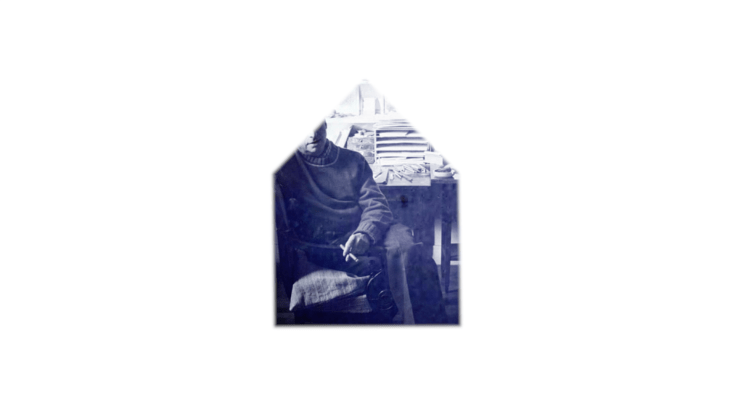
The Possibility of Existence By Shigeru Onishi

Reintroducing the Forgotten Masterpieces

The Possibility of Existence

Foam, Amsterdam

September 17, 2021 – January 9, 2022

The Flicker Phase, 1950s © Estate of Shigeru Onishi, care of Tomoharu Onishi, courtesy of MEM, Tokyo.⁠

By Nona Chen

Fotografiemuseum Amsterdam pays homage to the career of a forgotten artist in this monumental first solo exhibition of Shigeru Onishi’s photographic works in Europe. Surreal and captivating, Onishi’s compositions selected for The Possibility of Existence elicit questions concerning life, memory, and reality. The inaugural exhibition curated by Mirjam Kooiman features fifty photographs and one painting by the artist, presenting a body of work in line with Onishi’s style of “transcend[ing] time and space.”[1] The curation appropriately conceptualizes a nonlinear progression by arranging the photographs sans chronology (with the exception of a painting in the concluding position) with no singular theme dominating a room. The result: a stunning compilation of Onishi’s most quintessential artworks.

Title unknown, 1950s © Estate of Shigeru Onishi, care of Tomoharu Onishi, courtesy of MEM, Tokyo.⁠

Born in 1928 in Takahashi, Japan, Shigeru Onishi studied topology before pursuing a career in art. His background in mathematics persists in his photographs; by layering together a montage of fragmented scenes into one image, he constructs a picture that appears to collapse time and space. This technique is consistent throughout his photographic oeuvre featuring bodies, domestic scenes, nature, inanimate objects, and indistinguishable shapes combined to create images that speak to a sense of intimacy and uncertainty. Vincente Todolí comments on the subject: “Onishi’s photography has a performance element; it is presented as an act. He brings freedom to the photographic process,” explains the artistic director and curator of the exhibition at Bombas Gens, whose collaboration is allowing the collection to be exhibited at Foam.[2] After 1957, Onishi renounced photography and transitioned to creating abstract ink paintings in a style described by art critic and curator Michel Tapié as informal art: art that “focused solely on the act of painting itself”[3] of which form is merely a side effect. Onishi worked exclusively in this medium until his death in 1994.

Onishi’s role appears to be one of reconciling contradictory motifs, blurring the lines between photography and painting, reality and imagination, organic and inorganic, and thus, existence and oblivion.

The exhibition at Foam opens in a gallery of black and white walls that reflect the contrasting values of Onishi’s work. The photographs throughout demonstrate a profound skill for manipulating images into dreamlike compositions using multiple exposures, fragmented components, and unconventional developing techniques, establishing Onishi as a pioneer of Japanese photography of his time. His method of using a brush to apply the emulsion during the development process creates distinct strokes that cut boldly across a photograph and contribute to the abstract nature of his compositions. Though the selection of objects is exclusive to Onishi’s achromatic works, the pieces—some in high contrast and others blended into a murky greyscale—are anything but homogeneous. One photograph overlays several exposures of a smiling face averted from the lens, a wrinkled hand splayed over a checker-patterned fabric, and swirling streaks of emulsion; another overlaps silhouettes of barren trees and irregular rings of brightness across a dark grey haze. Dark juxtaposed with light, anonymous figures, and blurry, indefinite forms suggest the presence of meaning in the face of obscurity while underscoring photography’s purpose in capturing the transitive moments of life. Onishi’s role appears to be one of reconciling contradictory motifs, blurring the lines between photography and painting, reality and imagination, organic and inorganic, and thus, existence and oblivion.

Title unknown, 1950s © Estate of Shigeru Onishi, care of Tomoharu Onishi, courtesy of MEM, Tokyo.⁠

Foam’s curation effectively balances contrasting artworks to create a visually varied yet congruent experience. Only one isolated section of the gallery presents some pieces unilaterally in a rather condensed row along one wall. Although economical, this secluded area sacrifices the individuality of the photographs and allows little room for contemplation. Despite the shortcomings of the space, the unifying element was the decision to arrange two photographs of the same subject—the broad leaves of a flowering plant—directly mirroring each other at either end of the hallway to provide an intentional symmetry that ties the room together.

The final room of the gallery displays independently on one wall a colossal untitled painting by Onishi that surpasses in size the rest of the photographs. A work of towering, deliberate black brushstrokes and inky grey spatters vividly contrasting a white surface, the painting is evidently the outstanding feature of the exhibition. Onishi’s own hand is unmistakable—the brushwork of the painting mirrors the same strokes used for the unique developing process of his earlier photographs. The painting, in line with the motifs of Onishi’s body of work, presents both a reflection of the artist’s enduring stylistic consistency and a marked deviation from his long-standing career in the medium of photography.

Title unknown, 1950s © Estate of Shigeru Onishi, care of Tomoharu Onishi, courtesy of MEM, Tokyo.⁠

Considering Foam primarily shows photographic works, the unorthodox decision to exhibit a painting is bold but essential when taking into account the significance of Onishi’s experimentation in both mediums. With only one monumental painting among fifty photographs, there is a clear attempt to emphasize the role of painting without monopolizing the primary directive of a photography exhibition (and museum). Some might consider the notion of having a painting, and such a large one at that, as the culminating act of the exhibition—and therefore insinuating its unique prominence with respect to the photographic works—to be antithetical to the mission of the museum whose tagline, after all, is “We are all about photography.” Yet, how else to captivate audiences with a debut exhibition showcasing the revolutionary career of an artist deprived of the recognition he undeniably deserves? A memorable occasion necessitates a departure from tradition.

            Foam has masterfully compiled Onishi’s artworks into a narrative as captivating as the artist’s photographs themselves, with the themes composed by Kooiman profoundly and authentically reflecting the artist’s objectives in context of his career. The Possibility of Existence is not an occasion solely to appreciate Shigeru Onishi so much as it is a celebration of artists not yet realized in the canon of contemporary art. Such an ambitious revival of an extraordinary artistic career propels 20th century Japanese photography to the forefront of contemporary art discourse. The decisions made towards this delicate task of balancing the inclusion of the most crucial elements of the artist’s career, the devotion to a novel exhibition, and a faithfulness to the goals of the museum are commendable.


[1]“Shigeru Onishi – the Possibility of Existence: Now at Foam.” Foam. 2021. Accessed October 14, 2021. https://www.foam.org/museum/programme/shigeru-onishi-the-possibility-of-existence.

[2]Gloria Crespo MacLennan. “Shigeru Onishi, photography as a gesture.” The Limited Times. September 24, 2021. Accessed October 14, 2021. https://newsrnd.com/news/2021-09-23-shigeru-onishi–photography-as-a-gesture.Hy4fItd9QK.html

[3] Edizioni Galleria D’Arte Cortina, Milan, April 1969. Retrieved from museum label October 11, 2021.

Anique Jordan’s Nowing: A Political History of the Present

Anique Jordan, Untitled (2021).Nowing: A Political History of the Present installation shot. Patel Brown Gallery. Courtesy of Patel Brown and the artist.

Patel Brown Gallery, Toronto

May 15 to June 9, 2021

CONTACT Photography Festival Exhibition

By Danielle Taschereau Mamers

Masked, sanitized, and alone, I entered Anique Jordan’s Nowing: A Political History of the Present (2021) at Patel Brown and was met with works of radically different scales. To my right, six Toronto Star newspapers framed in white lined the wall, while eight massive steel silhouettes hung in a suspended v-formation to my left. Uncertain about the steel expanses and drawn into the more familiar task of reading, I turned to the newspapers. An archive of moments from the past year, the white space between headlines, images, and text was filled with handwritten notes that offered an account of the present contesting those reported in the paper.

The questions, lists, and quotations that fill the newspaper pages assert the knowledge and varied affects of experiences of racialized communities. Jordan’s annotative strategy asserts that there is more to say than what is being said, more to ask than is being asked. In doing so, the Toronto Star series—also titled Nowing—forwards Jordan’s ongoing practice of staging interventions in archival processes that erase Black histories from public consciousness. Nowing not only draws its title from Fred Moten’s work but also its method: “to look with love at things.”[1] The annotated pages introduce practices of paying precise attention and reclaiming authority as acts of care in the face of ongoing grief, as well as the possibilities of urgent creation in response to racial violence and deeply unequal experiences of the COVID-19 pandemic.

Anique Jordan, Essential, 2021, Archival print on Canson Baryta, 17 x 20 in. Courtesy of the Artist and Patel Brown.

Anique Jordan, Edge of Town, 2021, Archival print on Canson Baryta, 17 x 20 in. Courtesy of the Artist and Patel Brown.


The Nowing series features photographs of a selection of front pages of the Toronto Star newspaper, taken above the fold from dates ranging from March 30, 2020, to January 10, 2021. Each front page is annotated in black ballpoint pen, with questions and quotations filling the white space between headlines, articles, and images. Drawn from Jordan’s reflections and conversations with friends, the annotations are an archive of ongoing political analysis, unfolding in situ: the images are the accumulated labour of sifting through public policy and mainstream news media discourse from situated experiences. To read the annotations, I stood closer to the framed images than feels appropriate, sometimes craning my neck to the side to see the questions and quotations written sideways along the paper’s borders. As I inched closer to one image, I felt glad to be here in person rather than accessing the work through the gallery’s digital viewing room. It is difficult to imagine reading these annotations carefully without being present with them, without being able to twist my body in the ways the legibility of the compositions requires.

Essential, which uses the 30 March 2020 issue, introduces key questions that recur throughout the series: “How do we deal with the ‘now’ of death? Where do we put things we ought to remember but would rather forget? How do we make sense of something that we know will be historicized but requires immediate attention in order to find a way forward?” In subsequent images, Jordan’s annotations probe the uneven exposures to and techniques of surviving the pandemic in Toronto. Responding to the shifting public health policies of last spring that introduced masking, social distancing, and requested residents to stay home, Jordan’s annotations remind of the challenges poverty poses to staying safe. People still need to work, still need to ride buses, still need to survive in jobs that are labeled “essential,” but workers are treated as disposable. Identifying the gap between public health protocols and the racialized publics struggling to comply, Jordan reflects, “I feel like the province is saying to us, ‘why don’t they just listen?’ [and] I keep thinking, “why don’t you?’” The reflections, questions, and demands Jordan adds to the Toronto Star pages remind us that, as residents of the city, we may all be going through a pandemic, but we are not going through the same pandemic and are not exposed or protected in the same ways.

Anique Jordan, Nowing installation shot, 2021. Patel Brown Gallery. Courtesy of Patel Brown and the artist.

The Nowing series is the most recent iteration of Jordan’s strategy for working with archives. Many of her projects confront seemingly closed texts—from newspapers to municipal planning documents—with a strategy of remediation. Remediation is a practice of representing one medium in another, creating opportunities both for articulating how the represented medium operates and for attending to how shifts in format and materiality affect the use and interpretation of a remediated image, text, or document. Newspapers, public planning documents, and other archival forms that appear in the works selected for the show are frequently treated as immediate—that is, a direct representation or direct way of accessing information that is not transformed through the processes of recording, circulating, and archiving. In Jordan’s hands and the space of public exhibition, the Star and other pieces of media and policy archives appear as partial. Jordan’s annotations generate “elaborated images,” re-inscribing ownership of Black histories and affirm community knowledge over dominant narrations of the political present.[2] Like other forms of elaborated images that disrupt claims to representational authority, these works enact a decolonizing, future-oriented politics of refusal. By annotating and transforming documents into photographs, Jordan recovers the materiality of news and policy documents, probing how unjust worlds are actively made. Insisting on an extended space of engagement, these works also demonstrate how such worlds might be unmade through practices of looking, narration, and refusal.

Like other forms of elaborated images that disrupt claims to representational authority, these works enact a decolonizing, future-oriented politics of refusal.

Anique Jordan. Ban’ yuh Belly series installation shot. Patel Brown Gallery. Courtesy of Patel Brown and the artist.

The Nowing series emerges from a specific place and constellation of relationships, taking on the newspaper’s claim to be a contemporary record of events and analysis—one version of the city’s political landscape. These works expand the practice of record keeping. Jordan refuses to let the nowness or present history of Toronto’s Black and racialized communities be erased from this moment. The reflections, questions, and demands Jordan adds to the Toronto Star pages form a connective tissue between the discourse articulated in the Star and deeper social, economic, and political contexts. For example, in Codes—created with the 02 August 2020 issue—Jordan elaborates on a map of COVID-19 hot spots in the city, using her black pen to outline Neighbourhood Improvement districts. These priority areas were identified by the City of Toronto as needing additional resources to combat high crime rates and lack of services. Continuing to make visible the interrelation of virus exposure and economic abandonment, in Future (from the 10 January 2021 issue), Jordan asks how these areas became hot spots and why they weren’t adequately prioritized before the pandemic. The transformation of the newspaper into first a space of dialogic encounters and then an exhibited record demonstrates the multiplicity of political presents and pandemic experiences in Toronto. Rather than a banal nod to diverse perspectives, Jordan’s annotations record how the policies enacted in one political present—the present of white wealth, gentrified neighbourhoods, and relative protection—have profound impacts on the political presents of hers and other racialized communities across the city.

Anique Jordan. Ban’ yuh Belly series installation shot. Patel Brown Gallery. Courtesy of Patel Brown and the artist.

The Nowing series builds on assertions made by the Ban’ yuh belly series, exhibited in the gallery’s second room. In five self-portraits, Jordan’s steady gaze looks ahead, meeting neither the viewer nor the documents pinned to the black wall behind her. Collected documents point to a history of exclusions and abandonments: the Malvern town plan from the 1960s that excluded a commercial centre, newspaper clippings reporting on gun violence and changes to carding policies, and a handwritten list of administrative language and racial epithets that normalize and trivialize anti-Black violence. Jordan has described the portraits as documenting “the design of structural violence in racialized communities across Toronto.”[3] In addition to displaying this archive, the images ask about the human toll of living through inhumane city planning, ongoing gun violence, and grinding racialized aggressions. Discussing the series with photographer Michèle Pearson Clarke, Jordan reflects that the work affirms her community’s ongoing grief, “giving a place for that loss.”[4]

Future, the final image in the Toronto Star series, continues a line of questioning that moves through the Ban’ yuh belly images and many of Jordan’s previous works. Written and circled in black pen, Jordan writes, “Who gets the right to think of a future?” As I looked at each cover, moving chronologically through the annotated archive, I turned and faced perhaps part of Jordan’s response to her own questions: eight silhouettes cut from raw, grey steel, each nine feet high, suspended from the ceiling with their feet just skimming the concrete gallery floor. The untitled series was created from portraits of Black artists and art workers taken during Mas’ (2016), a performance Jordan mounted in the Art Gallery of Ontario where artists and community members filled the gallery’s central Walker Court, moving in a minimalist choreography as the artist read out the names of Black ancestors drawn from census records and of more recent deaths by gun violence. The steel figures are an archive of the performance—itself a powerful assertion of Black lives and histories in the white space of the gallery. I found the shift in scale from the Toronto Star and Ban’ yuh belly works to the silhouettes abrupt, as were the blank expanses of grey steel in relation to the specificity of Jordan’s handwriting and profile of the two series of photographs. Drawing Jordan’s past performances into relation with the image works, perhaps the figures perform the presence of a few of those individuals who are already claiming their right to think and create futures. Extending beyond human scale, these figures find their precursor in arming by clara (2017), where Jordan used steel silhouettes on a similar scale to mount a monument to Black bodies, survival strategies, and creativity.

The expansive presence of the silhouettes draws attention to how the show presents multiple contexts and structures of violence and unequal exposures to vulnerability, but the show does not make a spectacle of suffering bodies. Jordan protects herself and her community from gazes like mine—white gazes, more insulated from the violence the works document. Bodily autonomy is asserted in other, less-spectacular ways. Jordan’s handwriting is a trace left behind from her hands as they moved across the surface of the newspapers, a record of bodies of her and her community held together in their analysis of urgent political conditions. Her profile in the Ban’ yuh belly photographs is an insistent and challenging presence against an archive of abandonment. Amid the silhouettes, a community fills the room and carries forward Jordan’s challenge. The figures fill in the white space of the gallery, like the annotations that fill the white space of the newspaper pages. Each of the works included in the show activates a technique of making present, of filling in the absences created from the erasure of Black lives and histories from the city’s archives, policy, and public consciousness.


[1] Fred Moten, “Black optimism/Black operation” (presentation, Anxiety, Urgency, Outrage, Hope…: A Conference on Political Feeling, University of Chicago, 19 October 2007).

[2] Laurence Butet-Roch and Deanna Del Veccio, “Elaborated Images as Decolonial Photographic Praxis” (presentation, Visual Research for Social Change conference, online, 15 April 2021).

[3] Anique Jordan, “Anique Jordan in Conversation with Joanna Joachim” (presentation, Discourse in Motion symposium, Départment d’histoire de l’art UQAM, Arprim, and Artexte Montreal, 29 November 2019, recording available online).

[4] Anique Jordan and Michèle Pearson Clarke, “‘Where Does Art Get To Live?’: A Conversation Between Anique Jordan and Michèle Pearson Clarke,” Momus, 30 May 2019, online.

Making Attachments: In Discussion with Barbara Weissberger

Barbara Weissberger. Alter-hand, 2019. Photo documentation by Ivette Spradlin. Photo courtesy of the artist.

By Anna Mirzayan

Barbara Weissberger’s mixed-media creations feature a complex interplay between soft sculpture and photography. Her playfully staged images invite viewers to consider the nature of meaning, embodiment, and attachment. Recently, she has been delving more into sewing and other art forms traditionally labelled as ‘craft work,’ placing herself in the rich history of women in craft arts.

In 2019, Weissberger visited the Whitney’s ongoing exhibition Making and Knowing: Craft in Art (2019), which showcases a diversity of so-called craft art over seven decades, bringing together a historical litany of artists who use a wide array of materials and techniques from glass to sewing, pottery, and mosaic. Some artists at the Whitney make explicit connections between so-called women’s work and craft; Liza Lou’s Kitchen (1996) is a painstakingly crafted bead mosaic based on the 1950s American kitchens and a particular role that women’s labor, both material and emotional, played during that period of American industrialization. The resurgence of interest in art that references craft, coupled with Weissberger’s recent work with sewing and quilting, prompted this conversation. We discuss her ongoing interest in assemblage and embodiment, as well as the evolution of her work and the relationship between craft arts and feminist ideologies.

Anna: As a woman artist working in sculpture, collage and photography, do you feel that you fit in the lineage of artists and techniques represented by this exhibition? If so, how? And were you influenced directly by any of the artists from the show?

Barbara: I would say that my work has been inching toward craft over a very long time. I started as a sculptor and at a certain point I felt like I had hit a wall with objects, and I made a somewhat abrupt turn to making drawings, works on paper and collage, and, through a long circuitous route, arrived at making the photo-based work that I’ve been making for several years. I use a lot of cardboard and discarded material, so there was already this inkling of craft, DIY ‘low materials.’ But I think it was still rooted very much in ‘fine art’ traditions, as opposed to craft traditions. Now I’m making these photo quilts, so it’s very explicitly connected to craft forms.

Barbara Weissberger. More Fragile but More Enduring. 2019. Courtesy of the artist.

You mentioned that you started in sculpture, and there’s often also a dimension of photography in your work. But you print the photography, often on these non-traditional, softer substances, even if they’re mounted on the wall, some of them are more free-flowing. How do you see the relationship between photography, sculpture and the soft materials in your work?

Photography and sculpture have a long and intertwined relationship. After many years of making sculpture, I moved to drawing and collage using my own photographs. Eventually I started printing those, and then I started making installations with the photo fragments that I was using in the collages. And in documenting one such installation, something turned for me. I realized that I was quite interested in making such installations in my studio and making photographs of those. It was never quite exactly documentation, but the camera and photographs were a way of framing, organizing and keeping an artifact of what were temporary installations in the studio.

            For a long time, my photographs were printed on paper and then I often would treat the frame in some way to make it part of the photographic image. I might have an image printed on paper and also on fabric, then wrap the frame with the fabric. And in that way, that photographic image would expand out from the print. I was always trying to bring the photograph back into this realm of objects, which is where it came from, right? It came from this physical arrangement of things in space and I wanted to return it to that.

            Printing on fabric came out of an installation called GENERAL DELIVERY 59631 (2016) that I did at Incident Report in Hudson, NY, which was the first time that I had photographs printed on fabric. I quickly realized that printing the digital image on fabric made a very ephemeral image incredibly physical, and it would move in the wind with suppleness and fluidity. It was yet another way to make the image have this kind of physical embodiment.

Barbara Weissberger. Slash and Burn, 2020.

You say that you’ve now more fully embraced sewing and you have these quilts. It seems like you’ve been inching, as you said, more towards, for something that we would firmly call “craft.” What’s at stake for you in that move towards more craft objects and how does that fit with or change the overall themes of your work?

I thought about sewing and its relation to art-making [for a while]. I resisted it for a couple of reasons, partly because of learning to sew as a kid and feeling that it was connected to domesticity and femininity, in ways that I was not interested in attaching myself to. I also felt that there were lots of feminist artists who had made work in the generation before me who had beautifully mined those traditions. I just put it out of my mind, because it felt linked to craft and women’s work in a way that I did not want to embrace. So naturally, here I am embracing it!

I would say that my interest in bodies has always driven the work. It’s a discourse associated with female bodies and feminist perspectives (at least in Western art traditions), which has to do with boundaries, with fluidity, with anxieties about female bodies, with an idea of bodies as unruly things, tensions between control and unruliness. Sometimes it’s difficult to parse the space in my images. Even that instability has to do with boundaries and containment, and, ultimately, links back to some of those notions of bodies as container versus spills or unruliness. And then sometimes explicitly, there are body parts, fragmentary body parts, often mostly hands and feet, which are, arguably, not gendered (or able to move around gender).

Barbara Weissberger. Navel, 2019. Photo documentation by Ivette Spradlin, courtesy of the artist.


I think of bodies and attachment, and about how a viewer’s body might feel in relation to the work—intimacy and separation is the relationship between artwork and viewer.

Freud has this word unheimlich, which means ‘not at home,’ but in English it’s ‘uncanny,’ and its etymology fits with what you’re talking about, about not being in the domestic space, not being at home, in the body, all of these sorts of things. I saw your show, Mother (2019) at The Silver Eye Center for Photography, and your collaborative show with Eleanor Aldrich, The Soft State of Custodia (2020), at Bunker Projects, and I noticed many of these themes in both of the shows. What are the most impactful and memorable exhibitions that you’ve done, and how did it evolve your relationship to your practice?

The exhibition Mother was a key one for me. A lot of that show was about separation. I think of bodies and attachment, and about how a viewer’s body might feel in relation to the work—intimacy and separation is the relationship between artwork and viewer.  To make some of the photographs, I cut a hole in a piece of paper that I’ve painted – or cut a hole in a photographic print or a piece of cardboard – and hold that right in front of the camera lens when I make the image.  So, then a blurry aperture is in the foreground of the resulting image and that aperture acts as a frame within the picture, framing whatever so-called subject is in there.

 When I look at those images, it heightens my sense of looking out of my own body. The image becomes this kind of opening in a screen, like looking out of your eye and then into another opening. I think it heightens the sense of embodiment for the viewer.

For the fabric photographs I am making now, for the quilts, I’ve been sticking a knee-high pantyhose on my arm. And putting objects, like I have one of a banana in the stocking…so in the image, it’s my arm and hand enclosed in a stocking with some kind of object in there. And I’ve been thinking of those as attachments—a kind of hybrid—a body and a thing as one, and a way of attaching a thing to a body. And I do think it’s funny that I did a show titled Mother and was thinking about separation. I even had a piece in Mother titled Hold Me in which people were invited to pick up and hold these blobby large limb-like soft sculptures. And I thought, oh, funny, I made a transitional object for everyone! And so just to stick with the Freudian early childhood theme, I thought, oh, and now I’m making attachments.

And the quilts—I can’t help but think about a security blanket, particularly in our age of great anxiety; a blanket that covers, that comforts, that keeps warm, that sustains… which is not unrelated to mothers. It’s been amusing me thinking about making those quilts because they are the first body of work that I’m making after Mother.

Barbara Weissberger. Elephant, 2019.

That’s all very intimate, and I think that feels very vulnerable to do in a public place. It is almost opposed to the attitude that a lot of people have going into a museum space, or a formal gallery space because it’s so formalized and public. Even though a lot of artworks lend themselves to these really strong feelings, people are very private and individualized in museums. That’s sort of the antithesis of what you’re doing with dissolving boundaries and reforming attachments and inviting these different kinds of attachments. Quilts are meant for bodies, to enclose them, they’re meant to be warm, they’re meant to be comforting… so in a lot of ways they don’t lend themselves to this world of the virtual that we find ourselves in with COVID. Many artists have responded with new ways of making art, but I would call your quilts ‘anti-Zoom’ in a certain sense. Why is it important for you to keep making these tangible works during COVID?

Perhaps there is something to the physicality of the object. This is what I think is missing; I love that we can go to talks that are being held in cities far flung from where we are, and we can hear music and go to readings, and we can do all these things. And we can see pictures, we can see digital images, we can see screen images. But what we don’t have is being in physical proximity with artwork and having not only a visual but a physical relationship to it, with temperature and sound and smell and scale and material.

I have been posting images of the quilts but when I do that, I think of it as a placeholder. In reality, looking at a photograph always involves a physical dimension.

Barbara Weissberger. Adoration, 2019.Photo courtesy of the artist.

Part of what I was referring to with the experience of the museum space is, particularly with experiencing something like photography or painting, and even sculpture and installation, can really put you into this almost purely perceptive hypnosis, where you’re just this solipsistic, Cartesian cogito, and that’s how you’re looking at the art. I think that that’s very pernicious.

At Olafur Eliasson’s 2019 show at The Tate, Olafur Eliasson: In real life, there was an older piece that wasn’t accessible, but the Tate decided to just leave the piece as-is, and that it wouldn’t be accessible to anyone other than an able-bodied person. Eliasson’s wall text said something about how when you go to a museum or a gallery, and you’re looking at art, you ‘move as if [you] don’t have a body.’ And I read that, in response to this Ciara O’Connor who writes for the Irish Sunday Independent, and who’s not able-bodied, said ‘I am always, ALWAYS aware of my body.’  Looking at art is disarming, vulnerable, and intimate, which may be part of why museum spaces have an unspoken protocol of privacy and discretion.

Yes, and there are so many protocols against tactility— these taboos of not touching the art, and in some cases that makes sense; some pieces are fragile objects, and the materials lend themselves to corroding and eroding over time. And somehow that’s not acceptable. The temporality is not part of the work in a certain sense. Yet you have these works that are asking to be touched. It seems like that connects with your use of discarded or cheap or easily accessible objects and, which fights against the high/low art dichotomy. Can you talk a bit about that aspect of your work?


I use cheap materials, I use scraps, I recycle things a lot. Things cycle through the work; I might have a photograph printed on a fabric more than once, for various reasons. And then that means that certain bits of imagery appear in multiple pieces. I think using scraps is connected to an ethos of working that considers waste. Using what’s at hand also has to do with improvisation and making do with what you have. In addition to that, particularly with fabric, it’s very connected to the tradition in quilt making of using the fabric scraps, of not throwing them out, which is something about making the quilts that really suits me. It’s like I already have what I need in this stack of things that I haven’t yet looked at in quite the right way. And in that way, a photograph also becomes raw material.

Your work brings the material to the fore, which makes me consider the relationship to waste and trash in different ways. You’re using ready-to-hand materials. And to me, it strikes me as so different from ready-mades, which were considered art largely due to the critical discourse around them. What about your relationship to the things you make, and their status as art vs. object?

Apropos to what you’re saying about this teasing feeling between the functional object and the art object, how you decipher and determine or designate really goes back to the actual object and its application, and perhaps the uncomfortable way that it might slip between those. Something that I’ve been thinking about a lot lately, and it’s a somewhat new thought for me, has to do with the quilts and this idea of use and function. When I’m sitting in the studio and my studio gets really cold in the winter, and I think, “well, I have all these quilts…” They’re funny shapes, and I finish them with grommets, so they hang on the wall. But still, they are quilted and I’m putting batting in them, so they give warmth. They have this other aspect to them where they are not far from how they would function or be used as the thing that they are, and yet they’re not that thing; they are also the thing on the wall, pictorial, collage-like. Quilts are collages, they are fragments joined together.

Barbara Weissberger. Punchline (diptych), 2019. Photo Documentation by Ivette Spradlin, courtesy of the artist.

One thing that jumped out at me in Mother was that there were no object labels or titles or attributions, which made the viewer work hard and also resisted fixed interpretation. That was a fecund aspect of the show for me, yet I also found it anxiety-producing as a person who goes to museums a lot and sees a lot of object labels. Having that support structure suddenly removed was very jarring, and then I sort of embraced it. It really opened me up to a feeling that I’m not very open to when I go to museums, which is humor—art can be so serious. There’s a lot of slapstick and funny stuff in your work. What do you think is the role of humor in artwork and in the works that you’re making?


I find joking irresistible, and it’s irrepressible. It’s like a language. Humor is a language that I like to speak or feel comfortable speaking. But also, I think that humor in artworks can somehow poke at that tension between high and low art.

Since you are concerned with bodies, one aspect of the body is age. Earlier you mentioned coming up in a certain world and resisting traditional feminized roles. I’m interested in how your age has factored in, if at all, to your art and you as an artist and whether or not your work has changed as you’ve grown?

You were talking about how in the museum it’s about preservation and not decay. With the presence of bodies, you’re speaking about mortality, living and dying bodies. I think as you age, you think about mortality differently, and that changing relationship to mortality is something that I feel in the work. I think I felt that with Mother; I would not have made an exhibition and a body of work that was titled ‘Mother’ when I was younger. I don’t even think I would have looked at that kind of vulnerability around attachment and separation in quite the same way.

I think one of the things for me with the collaboration with Eleanor [Aldrich], who’s of a generation younger than mine, is the delightful co-existence of our differences and connections, it really brings to life what we’re doing. There’s something hopeful about it. We often say there’s what each of us is doing and then when we come together it’s like another life for the objects that we’re making—it’s a third thing.

Barbara Weissberger was recently part of Modicum, a group exhibition at Artspace New Haven. She is currently working on a series of photo quilts. In addition to being a Guggenheim Fellow and a past participant in the Drawing Center Open Sessions program, she is also on the faculty at the University of Pittsburgh in Studio Arts. You can see more of her work on her website or by following her on Instagram.

The Power is in the Black Gaze: Out of Many

Out of Many, Jorian Charlton – Curated by Emilie Croning 

Online Exhibit Launched February 6, 2021

Wedge Curatorial Projects 

Jorian Charlton, Untitled (Georgia), 2020. © 2021 Jorian Charlton.

By Nya Lewis 

Outside of my grandmother, whose matriarch status reigned supreme, the second most important member of my family puzzle was the uncle with the camera. He showed up at family picnics, at weddings, on front stoops. He captured us in our most intimate and vital times and held an ever-present commitment to capturing us in our truth. The keeper of this title changed from generation to generation, but never the importance. The see-er, the documenter, every Black family deserves an archivist. Author bell hooks describes the snapshot as the launch point of the visual in Black life, and I immediately consider the Caribbean proverb “We are the stories we are allowed to see.” The power of the snapshot is that it exists in opposition to the imposed imagery of Blackness. It is self-preservation. It is a representation of self-love and understanding. The Black family snapshot is a declaration of worthiness and authority, returning a sense of presence, too often lost in the white imagination. 

In collaboration with Gallery TPW, Wedge Curatorial Projects presents Out of Many. Curated by Emilie Croning, the exhibition pairs vintage 35mm slides loaned from photographer Jorian Charlton‘s family archive from the 1970s and 80s in Jamaica, Toronto, and New York, with Charlton’s photographic practice exploring contemporary visuals of Black aesthetics and Jamaican-Canadian identity. Both the exhibition and archive explore the inter-relations of the immigration story, new ways of thinking about Caribbean-Canadian culture, and rediscover the family album through a contemporary lens.

Jorian Charlton, Untitled (Ayo & Georgia), 2019. © 2021 Jorian Charlton

Out of Many, the exhibit’s title is a nod to Jamaica’s national motto, ‘Out of Many One People,’ created in 1962 to celebrate the unity of the country’s multiracial roots. The motto is represented on the Coat of Arms. Like many of its neighboring Caribbean populations, the stain of British colonization is imprinted on the makeup of its people: Indigenous, African, Chinese, South Asian- all brought to the island as enslaved people, or indentured laborers now contribute to this quilt of Jamaican identities. Large waves of forced and independent migration shifted the quilt’s makeup as early as 1960 as Great Britain and Canada called for British colonized Caribbean countries to send their best and brightest overseas. 

According to Statistics Canada, Canadians of Jamaican origin make up one of Canada’s largest non-European ethnic groups. Ontario is home to 85% of the total Jamaican Canadian population. It is here that the impact of Jamaican culture and its people permeate North America. The landing pad for the travel and spread of their intergenerational stories and the dialogue surrounding the preservation of Afro-diasporic identities and imagery become prevalent. 

At the center of this conversation, a Toronto-based, Black, Caribbean-Canadian powered organization: Wedge Curatorial Projects, “a non-profit organization with a focus on Black identity in contemporary art.” Under director and founder Kenneth Montague, Wedge explores Diasporic narratives, identity, and representation issues through exhibitions and lectures. Established in 1997, Wedge Curatorial Projects was initially conceived as a private and public art experience. Since then, it has evolved into a curatorial organization, representing national and international artists, creating a much-needed shift in Toronto’s art community, “wedging” Black artists into a mainstream market from which they are too often excluded.

Vintage 35mm slide (Ja Maica No Problem), photographed by Clayton Charlton, c.1979. Collection of Jorian Charlton, reprinted 2020. © 2021 Jorian Charlton.

Charlton’s father’s archive presents an opportunity for intergenerational dialogue on lineage, culture, and land. In an intimate welcome into the so-called “living room” of the contemporary Black experience through the Charlton family, we are given familiar representations of home, freedom, agency. Displayed in conjunction with the slides, Jorian Charlton uses analog and digital photography to visualize new storytelling methods. As Croning describes, together these images create a tangible remembrance of “what was, what is, and what will become.” Autonomy captured -the ultimate snapshot, Charlton’s work, influenced by fashion photography, centers Black bodies and reflects self-awareness and acceptance. Confident and direct, yet delicate and playful, the audience is all at once given and denied access to inter-communal recognitions of beauty and existence. In a country where the Black community encounters displacement, transformation, and mending, mitigated by site, the subjects actively communicate the complexities of agency simply by existing in contrast to their surroundings. Their “Home.”   

Jorian Charlton, Untitled (Jem & Mikki), 2020. © 2021 Jorian Charlton.

The beautiful, light-filled, colorful photos, oozing melanin, capturing piercing gazes, embody a sense of joy and freedom that is truly a relief. They are relatable; they are humanizing. Acknowledging the power of the Black gaze, the exhibit calls the audience making the invitation clear, an opportunity for the Black Caribbean community to see themselves. To discuss the importance of capturing images of the Black experience is to discuss civil rights, equity, and access. In full participation, the photography positions itself as a powerful reclamation, a visual resistance. To Black families, cameras give access to critical intervention, a disruption, shifting from being seen to seeing. Out of Many emotionally contextualizes immigrant Canadians’ experiences and the interconnectedness of their impact on first-generation Canadians. The exhibit homes in on the joy of photo taking, which is as important as displaying them when capturing marginalized groups. There is magic in documenting an existence that is consistently challenged. Through Black portraiture, Out of Many carves out an empowering show of record and representation on their terms.

Transitions by jailli

By Charlotte Rainville

Jailli. Transitions, Julie. 2019-2020. 35 mm film. Images Courtesy of the artist.

Biography

Charlotte Rainville (she/her), also known as jailli online, is a Montreal-based twenty-one-year-old freelance photographer, graphic designer, illustrator, and calligraphist. She is also a second-year Photography major and Psychology minor BFA student at Concordia University.
Rainville views experimenting with the mixture of photography, art therapy, event planning, cinematographic photo direction and psychology as her life’s purpose. Creatively, Charlotte focuses on storytelling portraiture, making people feel confident, educating herself on human psychology, and challenging her depicting and understanding of others’ selfhoods as well as her own. She defines her practice as creating light-and-minimalism-focused scenes, showcasing human connexions, and having a cinematic photojournalistic approach.

Project Description

 In “Transitions”, Charlotte Rainville analyzes self-shifting in women. She aims to immortalize teenager and newly “adulted” women in the middle of their own perpetual transitions. By doing so, Rainville wants to highlight the perseverance, instability, awkwardness, and vulnerability that growing-up shifts cause. Simultaneously, “Transitions” is her attempt at freezing subjects amidst their mutation, her invitation for them to look at their transitions from a more detached and objective perspective.


Unraveling our identity is a task which may seem very isolating at times, but in fact, it is tied to a broader and common search of each member of society’s goals and self-defining, marked by vulnerability and “existential crises.” With this project, Rainville, therefore, aims for the public to rally around the universal experience of transitional change, inviting the viewers to introspect about their own transitions: How has time imposed its oeuvre within you, how has it made you leave your mark on the world? What would you tell your fifteen-year-old self or future ninety-year-old self? Are you who you thought you would be? How have you changed for the better? For the worst? It’s worth pondering about.


Jailli. Transitions, Zelie. 2019-2020. 35 mm film. Images Courtesy of the artist.

Furthermore, “Transitions” is a reminder that what is even more unnatural than telling women that they are an object or that who they are is inherently sexual is stripping them of the right to represent their body as they please. Therefore, “Transitions” is also an attempt to establish a conversation around unjust censorship, specifically targeting social media’s censorship rules. Indeed, platforms like Instagram, whose censorship of the breast reflects the social norms that affect the female body, only contribute to the sexualization of women’s bodies. Through this series, Rainville addresses that the unfair censorship of women that happens online also impacts what happens off-screen, only feeding into an already vicious cycle of objectification and women’s self-hatred. 

Self-Love Tribute: In Conversation with Elia Fushi Bekene

Elia Fushi Bekene. What Home Means series. Image Courtesy of the Artist.

Interview by Adi Berardini

Currently based in Berlin, Elia Fushi Bekene is an African/French Queer-Feminist artist. Using a range of visual and audio approaches, their projects— including a podcast and a newsletter— are combined under ‘Self Love Tribute.’ Through their practice, Elia focuses on the strength that lies behind vulnerability and the power of radical self-care to counter the forces designed to oppress individuals based on race, gender, class, and power.

Bekene’s work explores the intersectionality of LGBTQ2IA+ communities, intimacy and vulnerability between women of colour, and how home relates to identity. Bekene is artistically driven by people and the psychological complexities of everyday interactions—reaffirming that emotions are not something to hide away but embrace and work through. Their work ranges from portraiture and video, to audio exploring topics such as decolonization, dating, and spirituality. Currently, in the midst of the intersecting crises of a global pandemic and Black Lives Matter protests, Bekene explains that although everyone has a role in the revolution, it’s time to center the Black women and femmes who have been doing the work for years.

I was wondering if you could speak more about how the Self Love Tribute Project started and the project itself?

It started in a funny way—I believe in signs or at least in my story. I moved to Berlin from France three and a half years ago now. I was working as a business analyst in a company and I hated my job at the time. I was also in a relationship that was not really serving me. Even in terms of relationships, and patterns and emotions, I felt like I was always doing circles. I was worried since I was meeting the same patterns over and over and I thought that it must be me since I am the common denominator in all of this.

When I went home after my job, I would take classes [about] feelings since I realize I don’t come from a family where feelings were explained, we just didn’t sit down at the table and talk about things like that. So, I thought that I would learn what those feelings mean, just on Google and I would Youtube what those feelings mean. Like what is jealousy, what is anger, what is hurt, all of the feelings that I felt at the moment? I would write down what would resonate for me. After a while, I [had] a book of just my thoughts. I would read it to a very close friend of mine, and he told me that I should publish it since it actually really helped [him]. I was telling a friend that I was hating my job, and she asked me, “Well what do you want to do?” And I said, “I don’t really know but I know that I want to help people.” Then she said, “Well what is it that you want to do?” And I said, “I love writing.” My first memory in my whole life was writing. I would ask my mom to write down “Maman” so that I could write, even before I knew what “M” was or “A” was, I just wanted to write.

The next day, my friend told me to publish my feelings, and it was just an email that I would send out every Monday. It would be just a newsletter, basically. I called it a Tribute to Self-Love since I realized I just didn’t love myself enough and I was on a quest to love myself more and understand myself more. I started this email sent from selflovetribute@gmail.com and it’s still the same up until now. I just asked 10 friends [if they could] be in my newsletter and they were like okay, whatever. Then I started to send a Tribute to Self-Love every Monday. It’s still going on now, I think it’s been almost two years—tomorrow I will be sending my 130th tribute to self-love—[that] I was fired on that same day. At that time, when I went out of this building, I knew it was a sign telling me that this is my new career, but more than a career, a path. It’s exactly what I’m meant to do. And of course, I am involved in a lot of things, doing photography, audio work and a podcast and everything. The essence of what I want to do is self-healing and sharing my ideas to the world and hoping it will resonate and help others with their quest to also love themselves more.

This image has an empty alt attribute; its file name is places1-1024x1024.jpg
Elia Fushi Bekene. Home is a place, from the What Home Means series. Image Courtesy of the Artist.

Your work explores the concept of home, and you discuss how colonization fractures home and culture through displacement in your audio piece “Decolonizing Myself from You.” Could you speak more about the significance of home to you and your practice?

I think it’s also a thing that comes back in my practice without me noticing because it’s just so part of my identity. Like so many people, I think that when you’re a Black person living in a white society it’s something that you always come back to since you question whether you belong here—people always make you question your belonging. The whole notion of having a home is a privilege, since so many people are refused a home or have to leave their home since people try to make other people’s home, their home.

It’s always this thing that I think is very personal and very political and very global especially now, with borders and all of that stuff. It’s something that comes up in the collective conscious but also personally being Black and [through] my mixed identity. I think being mixed is feeling like I’m always in the middle. White people tell you that you’re Black, and Black people tell you that you’re white. I think being mixed race, especially being mixed with white, is almost like a weapon against anti-blackness since it’s also light-skinned people who can be centered in Black Lives Matter movements. I think reconstructing the mixed identity is important especially when dismantling anti-Blackness.

It was always something I came back to, even when I went to Ghana. I wanted to document this whole thing around the 400th anniversary of when the first African people were taken off the shores of Africa to be slaves. I went there since I knew there’d be so many things about those topics. Then I found myself having so many feelings and documenting what I feel is home. When you travel geographically, you also travel within. I found myself asking—what does having a home mean? It’s something I think about even if I don’t really want to. I think it’s also in the collective consciousness, it’s on a lot of people’s minds, where is my home, where do I feel most at home and who is my home?

I found your video ‘dating in berlin’ to be hilarious but also heartbreaking when you explain how the queer community loves to hate and divide each other. I was wondering if you could speak more about the video and your process of creating it?

I feel like the more I learn about humans I realize the more we recreate our circles of oppression. I think there’s this sociologist who described it as “close domination.” She gave the example of white women who dominate women of colour in order to have close proximity to white men. [They have] the same hurdles as other women, but at the same time, they still dominate other women because of race.

At first, I just give my tea to everything and everyone in the community around me, but then in the second part of the video, I talk about how everyone wants to recreate their circles of oppression. I think like that’s what hurts me the most, colourism in the Black community. I’m a light-skinned person here in Berlin, I see how people just don’t want to understand their light-skin fragility or their light-skin privilege. For me, it’s so hard to understand that they don’t get it, it’s just so easy for me to get that we may be Black, but we don’t live the same Blackness. We don’t live the same oppressions based on our gender, how we look, if we’re able or not, if we’re older. There are so many things you can think about and I find it so disappointing when a person knows what it’s like to be discriminated against, but they cannot understand their own oppressive ways or that they have certain privileges.

If we don’t protect the ones that we should protect the most, then that’s problematic. If we don’t make sure that Black Trans women are at the center of everything we do, how can we go any further? 

For example, there’s a lot of queerphobia coming from Black people. I just think why would you do that to someone who looks like you? Why are there so many asterisks in your Black liberation? Like “Yeah, I want Black liberation but not for Trans women though.” Why? It just doesn’t make sense. I found it so fascinating but there’s so many “buts” behind liberation. In many ways in Berlin when we get together, there’s so much trauma Olympics, everyone wants to say I’m hurting the most. Of course, not Black Trans women who are actually the most oppressed in our community. It’s not a matter of you not being oppressed, it’s just a deep insecurity of being so rejected outside of this world that we’re just trying to have light when we’re together, so we create this huge amount of pain on top of pain.

Of course, I think the queer community has given me so much, not just here but everywhere. I religiously only listen to Black people or queer people because I find myself so much closer to [them] with politics and spirituality. I just find we can be so destructive when we want to make it personal and not think about the biggest purpose, which is liberation for all. A lot of us personally, we’ve been so rejected, and we didn’t get the space and time to speak. So, when this happens and the ego comes up, on an [intrapersonal], political level it’s interesting to see, but on a personal level, it just feels relentless.

My video was more like, it’s great that we’re all queer and people of colour, but we are still hurting ourselves. If we don’t protect the ones that we should protect the most, then that’s problematic. If we don’t make sure that Black Trans women are at the center of everything we do, how can we go any further? There’s so much racism, there’s so much fatphobia, or femmephobia, or anything, there’s always something. In my videos I give a “Yeah, I’m just done,” since sometimes I really just do feel like that, that humans are just trash since the society is trash. We will never get out of a situation where everyone understands that it’s not about us personally, it’s about the bigger purpose. I’ve also tried to make everything about humour since I know most of the time things are so sad that I try to make people laugh.

This image has an empty alt attribute; its file name is home-ies2-1024x1024.jpg
Elia Fushi Bekene. Home is the Home-ies from the What Home Means series. Image Courtesy of the Artist.

The Black Lives Matter movement is currently at the forefront globally after many years of activism. What role do you think art has in social change and how does this intersect in your practice?

I think art is such a powerful practice and I believe that everyone has a role in the revolution. There are people who cannot go to the protest, physically or mentally for different reasons, but they will do something for Instagram to spread ideas, some people will make food for people who go to the protests, some people will be able to console or hold space for others emotionally, some people will heal. I think it’s so important to know what role you want to have in the revolution.

The Black Lives Matter movement is not new for us at all, so for us it’s a new wave of consciousness for other people to understand, and people in power. I am grateful for—well, it’s terrible to say this—but the horrible consequences. I’m glad that people are listening even though they don’t want to listen. People will hold them accountable for not listening.

Anything with human rights, for women, for Trans people, for Black people for anyone—I’ve learnt that compassion is not something everyone gets under capitalism, so we have to teach them. I’m worried that I get so emotionally drained from explaining things that are so obvious. I do this without me knowing, I know a lot of people tell me, “you opened my eyes to this.” It’s great, but I still try to stay selfish in all of this since I am a Black person in a white supremacist system and a queer person on top of this. Prioritizing this is such a “fuck you” to the system. I’m going to log off of social media, I’m not going to talk to people, I’m going to stop talking to my mother if she doesn’t want to understand. Social change and social justice are part of what we do because when you’re a Black and queer person everything that you do or say is political, even though I don’t even think of it as political. White, straight men have so much of the power outside that everything I do looks super horrendous or something when it’s not.

Now, I think that art has been such a powerful way to show people that actually [connects] the human experience, change is the only constant. There are people who are trying to put change and revolution down, but at the end of the day with social media, things spread so fast. People are willing to change, hopefully, and willing to learn. I think it’s beautiful to see. I think art is definitely such a privilege, I realize that when I talk to white people about racism they might have problems or things in the way to understand it, but if I do it as an art piece, they will feel more receptive to it. But now it’s so white-washed, museums are just full of white men.

I think everyone is an artist, really and truly, everyone is creative in their own way, but they just don’t put it outside in the world to judge it. Art is definitely important in the revolution. I think it’s the most comfortable way for me to participate while still having pleasure and that’s very important to me. If I just talk and have a dumbass conversation about race and I’m not having pleasure, then I’m depleting myself from my energies and not [getting] anything back.

It’s great that people are doing work with grassroots organizations, like designing posters or graphics to spread the word on Instagram. It’s so powerful, but at the same time it’s a little bit sad there’s been so many people in these organizations who have been doing the work for years and years, oftentimes Black women, and people don’t give them enough flowers while they can still smell them. At the same time, if you can help the revolution to go somewhere and to be even brighter, I’m all for it. This may be the best way.

Do you have any news to announce or projects coming up that you are working on that you’d like to discuss?

No—I think it’s great for people to see. It’s hard to be an artist in this world, especially when you’re Black and queer. I want people to see that I have nothing coming up. I was just going to apply for grants or residencies but not anymore that things are so up in the air. You’re not tied to your productivity. Of course, the financial part of it is really hard because you need money to pay your rent. We’re in the middle of a global pandemic with so many things happening so it’s really okay that I don’t have anything going on. The world has so many other things to take care of. It’s also good that we take a little time off to reflect. Let’s use 2020 as a time to stay home and reflect on the things we can do better and decolonize ourselves more.

To check out more of Elia’s work, visit their website and Instagram, @selflove_tribute.

Colour and Commodity: Marilyn by Sara Cwynar

Sara Cwynar

Marilyn

27th February 2020 – 30th April 2020

The Approach

SaraCwynar_redlips
Sara Cwynar, Marilyn, installation view at The Approach, London. Courtesy the artist and The Approach.

By Adi Berardini

 “Cezanne…it’s Susan,” the voice in Sara Cwynar’s film Marilyn echoes. Cezanne jewellery boxes act as a signifier of high-class wealth, opening multiple times throughout the collaged-footage film. Suddenly, I have flashbacks of every time someone has mispronounced my name—something that many women likely know well. I have to introduce myself saying, “it’s Adi. Eighty like the number.” Then, I think of how it’s depressing that I have to assign a numerical value to my name in order to be remembered. Isn’t remembering someone’s name a sign of fundamental respect?

In Marilyn, featured as an online exhibition at The Approach, Vancouver born, New York-based artist Sara Cwynar addresses how the commodification of women’s desire is not only prevalent but ingrained in a capitalist society. On the inspiration of the title, Cwynar explains how “the X-Rays of Marilyn Monroe’s chest sold for $45,000—even the inside of her body was up for grabs.” Often with a seductive, vintage feel, the film specifically uses soft pinks and siren reds to display the relationship between colour and commodity. The narrator chimes in with, “colour, decided by someone else, handed down, placed upon us.”  Reminiscent of shopping for lipstick and attempting to find the perfect colour, it causes me to dwell on how individuality can be both a myth and a marketing ploy. I think of how it’s ironic that women don’t have full autonomy over our bodies, yet there are hundreds of shades of lipstick to choose from. 

SaraCwynar_image
Sara Cwynar, Marilyn, installation view at The Approach, London. Courtesy the artist and The Approach.

“I’m telling you these reds aren’t real,” the narrator states in a voice reminiscent of Patrick Bateman in American Psycho. 

The lips are referred to as a red wound, a seductive and vivacious symbol, but also one that is tied to violence. A hand strokes a lavender rose; the film repeatedly zooms in on a fashion editorial, a shot of a woman posing with matte red lipstick. Cwynar is interested in the production of photographic tropes and how they are just as manufactured as the makeup that the models wear. She has worked as a graphic designer for the New York Times, and frequently shoots her colleague Tracy Ma, since Ma is also familiar with media construction and its inherent power imbalance, particularly as a woman of colour. Footage of make-up manufacturers reel, showing the creation of buttery foundation and saturated glitter eye-shadows. While the cogs of the machine hypnotizingly churn, the darkness envelops us, consumed by the same cycles—a loop. Cwynar is fixated on the same few poses the models for popular e-commerce sites repeat. The film speaks of the idea of “a New Woman, “a Face,” and how the patterns were invisible to us before.

“I thought of the women of antiquity who were accused of lying for making up their faces.”

SaraCwynar_image2
Sara Cwynar, Marilyn, installation view at The Approach, London. Courtesy the artist and The Approach.

The film is primarily narrated by a man’s deep voice and a woman who chimes in at times, almost like she’s trying to get in a word during a meeting where a male colleague takes up too much space. The artist is pictured trying to lip-sync the narrator, an act that seems like a reclamation of what he’s saying in a tried but failed manner. The inter-spliced narration is in reference to a myriad of philosophers and cultural icons such as Descartes, Barthes, Plato, Sontag and Eileen Myles, and focuses largely on colour, art, capitalism, and gender. The artist says phrases like, “Women create life, men create art but not anymore, suckers,” and “I know I have a body of a weak, feeble woman but I have a stomach and a heart of a king.” Suddenly, the clearance sale is filmed from the vantage point of an escalator— “60% off!” the red tag reads, illuminated by fluorescent mall lighting. There are deliberately too many media snippets to contemplate simultaneously, enacting the oversaturation of advertisements one subconsciously faces during a trip to a shopping mall or scrolling through their phone.

“A new image comes without warning.”

SaraCwynar_men_bust
Sara Cwynar, Marilyn, installation view at The Approach, London. Courtesy the artist and The Approach.

A key aspect of the film is how nostalgia fades in a capitalist ploy. It also evokes how companies re-appropriate trends and nostalgia to sell their products to consumers. I witness not just the plaster nude bust, but the staging and the men behind it, setting it up. Several shots of a blonde woman’s slick red manicured nails are seen stroking a cherry convertible. Sliding by are a plethora of lipsticks, collaged over a shot of Claude Cahun and vintage film photographs of near-nude women. The voice of the narrator evokes the posts of Instagram influencers, inherently narcissistic in nature, but oh so deep. These days, it’s impossible to tell if someone genuinely likes something or they’re trying to sell it to you. The voiceover proclaims that she loves the times, she can buy anything she wants, but it’s hard to believe her when her face is visibly stressed, tears welling up in her eyes. She searches for pleasure where she can get it, but it hardly seems to be authentic—the glamour fades just as feelings do.

“To choose when to look and when to be looked at, that is the essence of true freedom.”

Cwynar addresses how in art women are thought of as objects and not subjects. With an array of commodified colours in her palette, the films address the painful reality of a society that uses the idea of “freedom” as a marketing method to sell back a sense of feminist empowerment. I can’t help but think we’re trapped in a system that’s difficult to escape.

Orienta 7: Mapping the City in Unexpected Ways


Students in a guided tour at Moulay Alhassan Gallery
Students touring Orienta 7, courtesy of Chourouq Nasri.

By Chourouq Nasri

Oujda, Morocco

October 10 – November 30, 2019

The way art can transform the city is the theme that knits together the key moments of Orienta 7, an art event organized in Oujda, Morocco from October 10 to November 30, 2019. Orienta’s curator, Azzeddine Abdelouahabi is an artist and art critic who lives between Amiens (France) and Oujda (Morocco). To show art’s potential for social and spatial subversion, he invited local and international artists to remap the city in a new way. Their artworks coalesce into narratives that unlock the parallel between the intimate and the global.

A vast range of media (from painting and sculpture to installation and art-video, digital art, photography and political activism presented as art) are used by artists as a way to expand the limits of representational art and to bring art to life in new spaces in the city. The curator conceived each of the locations of the event as one of the seven provinces imagined by medieval geographer and traveler Charif Al-Idrissi in his map of the world. He distributed the artists among seven venues between the medina (the old city) and la ville nouvelle (the new city).

Mohamed Rachdi
Mohamed Rachdi. Frontiers, aluminum sheet, Orienta 7, Oujda 2019.

The first exhibition in this event is set in Charif Al-Idrissi Library in the narrow, tortuous streets of the old city. Palpable in this first province is a sense that both the city and the event are living systems, mutually shaping one another. Mohamed Rachdi’s art installation occupies a large area of the old library courtyard. The artist created a big round silver basin and filled it with water and objects in the form of alphabet letters. As we get closer to the basin, we have an urge to plunge our hands in the water and play with the letters. On the wall in front of the basin, letters made with scraps of maps read: the world belongs to us. The work is powerful in its simplicity. The artist attempts to understand the philosophies of nomadism; he centers the experience of belonging on the need people feel to move across borders. Boundaries, according to Rachdi, have a different significance depending on who you are. They are constantly shifting and evolving in response to political, social and climate changes.

On the other side of the library courtyard, two sculptures representing Charif Al-Idrissi are set next to each other. One is made with bronze and the other with sponge, an unusual and unpredictable material. The first artwork will last for a long time while the second, paying tribute to the legacy of a fragile and ultimately temporal medium, is doomed to perish shortly. The sponge grey sculpture also symbolizes the transience of life and the intense emotions of living on the edge that Chariff Al-Idrissi, who was an adventurous traveler, must have experienced. Jawad Embarki is searching for a way to make art fulfill a recuperative function, to not only memorialize a loss but to create something out of it.

Imad Mansour
Imad Mansour. The Death Boat, plaster molding and ink on paper, Orienta 7, Oujda 2019.

A sculpture in the form of a sailing boat with three men’s busts in it confronts visitors as they enter the library’s main gallery. The white flower-shaped boat is a funeral tribute to the migrants who die at sea—causing both discomfort and fascination for those who look at it. Like much of the media images we are overwhelmed with, it makes us feel compelled to witness although we would rather look away. Imad Mansour, an Iraqi artist living in Morocco created his sculpture with regular white plaster, the same material he used for another art installation in a different venue. In the middle of one of the rooms of Omar Ibn Abdelazize high school, a building known for its architectural charm and historical significance, a pile of white tied knots lie on a table, as if to point to the interwoven strands of the different exhibitions. The work is also an attempt to draw together the threads of displacement and alienation which have become a condition of contemporary culture within art.

Bachir Amal
Bachir Amal. Stories, mixed technique on paper bags, 660 cm x 450 cm, Orienta 7, Oujda 2019.

The artworks displayed on the walls of the gallery seem to say that life goes on while migrant death tolls continue to rise. Bachir Amal’s unsettling combinations render the complexity of modern life. The artist has used paper shopping bags as canvases for his paintings, drawings, and calligraphies and assembled them into surreal configurations. What makes the work so arresting is its simultaneous evocation of seemingly contradictory states: colonialism, consumerism, and aesthetics. While the collage directly evokes Magritte’s Key to Dreams, it also brings to mind the pop art works of Andy Warhol.

To explore the relation between people and their environment, Hafid Badri uses the language of maps in a very original way. He fashioned scraps of maps combined with Bachar Alassad and other dictators’ pictures into complex forms, reducing countries and even continents into wooden shoe molds hung on a wall and presenting an uncanny tableau. The small sculptures look elegant from a distance, but on closer inspection, we realize that the artist uses the language of surrealism to confront political violence.

Hafid Badri
Hafid Badri. Heartless, collage and wood assembly, Orienta 7, Oujda 2019.

Lala Mariyam Park, a beautiful garden in the heart of the old city explores personal and collective experiences of marginalization and oppression in a different way. Artists Esseddiq Fadhil and Fatima-Zahra Zahraoui have produced a constellation of unusually large Gharnati musical instruments in unabashedly bold colors. The diasporic shift of Andalusi populations is further explored through a retrospective textual view of the history of Gharnati music set at the entrance of the garden.

In the new part of the city, a huge dinosaur sculpture is set in front of the archeology museum that is in preparation. The dinosaur is stylishly provocative, but the provocation seems oddly detached from its subject. This surprisingly huge statue is intended to put the passersby out of their comfort zone—to remind them that Oujda has a rich pre-historical heritage.

One of the most-notable exhibitions of Orienta 7 is organized at Moulay Alhassan Gallery. The exhibition proves a moving tribute to Brahim Bachiri, a Moroccan artist living in France who died earlier this year. Mohamed Rachdi who designed the exhibition scenography took full advantage of the space offered by the gallery and transformed it into a philosophical and aesthetic territory where the art of Bachiri is celebrated. Upon entering the gallery, we are met with a video of the artist shaving his head. The work was made a few years ago as a homage to Driss Berkani, a French man of Moroccan descent who was the victim of a racially motivated murder. But the feeling we get watching the video is that the work is a rumination on death, namely the death of the artist, and on the immortality afforded through art. As if to reinforce this feeling, a white mausoleum-like structure enshrining a photograph of the artist’s naked torso is set in front of the video. The artworks across the gallery walls and floors reflect the multidimensional artistic trajectory of Bachiri and show the artist grappling with his own experience living in France and being of Moroccan heritage in a context marked by Islamophobia and racial discrimination.

Brahim Bachiri
Brahim Bachiri. Artiste Halal (a lawful artist), neon stamp in French flag colors (blue, white, red), 200 cm x 200 cm, Orienta 7, Oujda 2019.

“A halal (lawful) artist” and “Slaughtered according to Islamic dietary law”, the formulas Bachiri sculpted using neon found their way onto the gallery walls. The words bring to mind brutal images posted online by Daesh jihadists and remind viewers that in the aftermath of 9/11, it is difficult to disentangle Islamism from terrorism. The formulas which are used to ensure the Islamic origin of meat have been voluntarily politicized by Bachiri and transformed into a way of denouncing state-sanctioned violence and brutality. The words have become a sort of stamp that provides an overview of the artist’s varied satirical art practices which highlight his layered, idiosyncratic visual identity, one that places a particular emphasis on calligraphy. The viewing experience could almost be meditative; it eschews the easy possibilities of false catharsis. The exhibition narrates a story of activism.

Orienta 7 visitors walking through the streets of the old city to explore the different venues of the event.
Students touring Orienta 7, courtesy of Chourouq Nasri.

The photos of Khalid Alachari appear alongside Hakim Boulouiz’s in one of the most visually compelling shows of Orienta 7. The works of both artists are an exploration of how identity takes place. The two artists have created artworks that are not merely representational but are worlds in themselves. Alachari focuses on tiny unnoticeable details in such a way as to transform ordinary landscapes into extraordinary abstract-like paintings. Boulouiz, on the other hand, makes fine, carefully composed photographs incorporating flashes of color, unexpected juxtapositions and paving the way for many layers of meaning. His fine art photos attempt to understand what and how people convey, contest, or otherwise negotiate aspects of contemporary urban life. They also offer a rare perspective on the artist’s relationship with the city or what he calls “mise en ville”. Boulouiz’s photos make the viewer feel puzzled, unsettled and mesmerized.

Many of the works displayed in Orienta 7 can be fully appreciated only by prolonged, up-close viewing. They are not isolated in time and space and must be put in context. The ultimate purpose of this important art event is to encourage the viewer to think differently, to stop and take the time to confront their own preconceived notions and to participate in the remapping of the city.

Photography, Collage and Nostalgia: An Interview with Foxtrapped

Collage 2
Foxtrapped, Untitled Collage 01 (That Photo I Stared At Every Time). 2018. Archival Inkjet Prints and Found Photographs on Masonite.

Questions by Adi Berardini

When I first saw two large-scale collages by Brit Moore-Shirley, otherwise known as Foxtrapped, I felt nostalgic for moments I’m not even sure exist. The collages, pieced with pastel colours and childhood photos, made me feel a sense of freedom like driving down a highway with my hair tumbling in all directions. I remembered the time I should have kissed someone in a parking lot with slick streets from recent rain. These nostalgic feelings are too often related to temporary freedom or pangs of sadness and regret.

Foxtrapped is a young emerging artist from London, Ontario, currently undergoing studies at the Nova Scotia College of Art and Design in Halifax, pursuing a BFA in interdisciplinary studies. Brittany’s process has grown quickly into an interdisciplinary (post-medium) practice that relies heavily on elements of photography, collage, and installation, alongside sculpture and ceramics. They came out of the closet when they were 17 and have since utilized their position as a visual artist to encourage a dialogue about narratives and lived experiences that are often overshadowed and overpowered by louder more dominant voices. They hope to provide an opportunity for the audience to allow themselves to empathize with these voices and narratives that are often ignored and are commonly scraped from history.

  1. I find that your work is rooted in nostalgia and some pieces seem tied to childhood memories. Can you further explain the influence of nostalgia on your work?

While I do consider nostalgia to be a part of the conversation surrounding my work, it’s never what I think the conversation is primarily about. Nostalgia, this longing for a return to something, is an exploration mostly through the media; it has a very direct relationship with nostalgia. This is because I’m attempting to document my own history (whether that be personal family history or the history of the various aspects of my identity). The usage of these traditionally nostalgic items is more to analyze than to convey a homesickness or a sentimental yearning for that which was. The items I’m using are done so to displace nostalgia and displace the associations we have with items and memories from our past rather than yearn for them. I want to create a conversation that places those of us with a past we find difficult to navigate, at the forefront. Susan Sontag has this quote from As Consciousness Is Harnessed to Flesh in which she writes: “My loyalty to the past – my most dangerous trait, the one that has cost me most”. To me, nostalgia seems neither good or bad but rather a very delicate and potentially volatile idea. We frequently assume a nostalgia for childhoods or our pasts and I find myself wanting to create from an analytical position that challenges this.

Additional Image 3
Foxtrapped, Still from Home (Searching), 3:03, 2018. Experimental Film, Found Footage.

  1. In your work Queer Ephemerality, you address the fact that home is not a queer concept but one rooted in patriarchy. I found this work incredibly moving, especially since a large percentage of homeless youth are queer. Can you further explain this piece?

Queer people have this very interesting relationship with the idea of home and I started realizing that a lot of queer media centres around that exploration. Of course, the obvious queer relationship to home is one that shifts and may possibly fracture when we start coming to terms with our identities and whether we decide to come out or stay closeted – it’s so much more complex than that. The environment we’ve created wherein queer people have to come out, also means that we’ve created a society where queer people don’t frequently have the privilege of aspiring towards home, both in the classical idea of that term (a nuclear family) and the comforts it brings (security, love, safety, support, etc.). In so many ways, we are exempt from this possibility and we function in this state of homelessness. So, even if our trauma isn’t strictly related to being kicked out of or escaping from a family home, home is still really difficult to navigate as people who exist outside of the patriarchal, heteronormative, and cisnormative ideas of this ‘happy ending’: bury your gays tropes, lack of meaningful representation, the closet, and inadequate legal systems all contribute to this homelessness. Queer people routinely seek alternative homes, places that tend to be temporary. We find these in other people, in community centres, in spaces that are set aside for being queer, or in any possible narrative that presents happiness as a queer option.

My hope is to present queer people (specifically queer youth) with the various possibilities of home – so that while we’re mending the harm caused by the patriarchy and cis/heteronormativity we can still find comfort, safety, security, and love in our own ways.

Childhood Inastalled 1
Foxtrapped, A Childhood in Pixels: The Place On My Mother’s Sweater Where I Rest My Head. Scanned Analog Photographs, Archival Inkjet Prints, Acrylic on Wood. 2018.

  1. In your work A Childhood in Pixels, you use abstracted childhood photos that are reduced to pixels with subtle variations of colour. Can you further explain this work?

This is a good example of my attempts at documenting and deconstructing my own history. Family photo albums are these amazing objects — almost everyone has family photos and so they’re this incredibly accessible object. They often hold so much importance to us as individuals but they mean nothing if they’re not yours. The clarity of the image becomes pointless. At no point in these pixelated photographs does it matter if you can see my father and I’s feet in the sand when I tell you that’s what the photo is of. [Consequently], you are asked to bring your own experiences and relationship to symbolism to the work. Each print is part of a photo from my childhood, I’ve isolated the parts of the photo that sticks out to me – the punctum. I further this by asking the viewers to hold the voxels (a 3D pixel) placed on plinths in front of the photographs in their hands. Each voxel is painted to match a pixel within the print, making the photograph physical and pairing that with the trust of asking my audience to hold something that is so ephemeral and fragile in its relationship to myself.

Just a Photograph
Foxtrapped, Fatigued Nurse. Found Imagery, Photo Collage, 2018.

  1. Your work addresses queer (in)visibility and the lack of empathy towards the queer community. What first inspired your series, Look Who’s Really in Pain, about the lack of empathy and objectification of HIV/AIDS patients?

Three months before I was born my Uncle Steve took his life after a lifetime of abuse from our family – I’ve slowly started uncovering his life and collecting the few remaining pieces of him – the horrendous obituary and the only photo of him I could find. I want to protect him. I feel the same regarding those who were directly and indirectly impacted by the AIDS crisis of the 80s and 90s.

There’s this huge gap in queer history, you can read so much on how we practically lost an entire generation of people and AIDS survivor syndrome has altered the rest. Yet so many of us don’t know this history —and certainly not as well as we ought to. This generational gap is scary because it means we have less ownership of our history and history in our current world comes with a sense of belonging and the right to our identities. Somewhere along the lines older queer people and younger queer people stopped communicating. We, as a community, survived the AIDS crisis of the 80s and 90s because we fought for and with our lives. Their deaths are the reason I have the privileges I have today, yet so much of that history suffers from being rewritten with a hetero/cisnormative bias. Now it frequently serves to give fame to the straight and cisgender people who were empathetic to us. These pieces largely stem from that frustration. I am extremely protective of our history. These people who had so much taken from them: if their stories aren’t being told truthfully, they are being used as pawns to sell this completely false narrative about how painful the AIDS crisis was for straight people – I want to undo this. Disrupting the imagery serves to relieve them of their indebtedness to this false history. In the end, drawing direct attention to a washed over history, protecting them from these lies, and stitching queer narratives back together.

  1. Who are some artists you find influential?

I have had the privilege of being surrounded by artists I truly admire and gain inspiration from so I’d like to mention some of them as well as those I’ve come to know through research, so in no particular order and from no particular time: Felix Gonzalez-Torres, Kiam Marcelo Junio, Robert Mapplethorpe, Roland Barthes, Susan Sontag, Annie Leibovitz, Claude Cahun, Hank Willis Thomas, Lynn Park, Brooke Tomlinson, Brody Weaver, Monica Joy Peeff, Madison Powers, Jeffrey Heene, Julian Miholics.

  1. Where do you see your art practice going in the future?

So much of my work depends on an understanding of contemporary assumptions that we make, I look forward to the day when the work I’m making now becomes contingent on its history and setting. There will be a day when people look back and have to remind themselves of the assumptions we used to make because we’re no longer making them. That will mean things have changed for the better, and I can move on to critiquing some other system in place and helping these changes continue to grow.