Tough Conversations: (un)happy objects at Artcite Inc.

(un)happy objects Installation photo, ArtCite Inc. Photo by Adrien Crossman.

(un)happy objects

Artcite Inc. Windsor, ON

October 15th – Nov 20th, 2021

By Adi Berardini

How one approaches tough conversations can be telling of who one truly is. When I first came out to my parents, I blurted out that I was queer while in the passenger seat of the car. I think that my reasoning behind this was that if there was a negative reaction, I could quickly escape after we had arrived. I worked up the scenarios in my head beforehand and often let the anxiety get the best of me. It’s a common desire to want to avoid difficult conversations for fear of rejection. Strategies, such as humour, can be used as a deflection for these anxiety-ridden conversations that are difficult to put into words.

Humour, intentional opacity, and inclusion versus exclusion, are demonstrated as themes in the exhibition (un)happy objects at Artcite Inc. featuring artists Madelyne Beckles, Vida Beyer, Kaythi, and Shellie Zhang, curated by Adrien Crossman. Through the framework of Sara Ahmed’s Happy Objects, which claims that we value an object based on how it affects us, orienting us towards what makes us happy and away from those that don’t,[1] the artists encourage viewers to face their anxieties around potentially “unhappy” topics relating to homophobia, racism, and white supremacy. As Édouard Glissant advocates for the “right to opacity” in Poetics of Relation, the oppressed, and those historically labelled as the “Other” should be allowed to be opaque, to not be completely understood, and to simply exist as different, challenging the reductive transparencies that classify others using dominant structures of worth.[1] Often referencing pop culture and focusing on text, the artists use accessible media such as textiles, video, and neon signs to address these topics.

Kaythi. Our Lady of Profound Failure. Photo by Adrien Crossman.

Walking into the exhibition, the first work I encounter is Kaythi’s Our Lady of Profound Failure, a brightly coloured rug that reads “DYKES ONLY.” The rug was created as part of a workshop on ‘Unwelcome Mats’ by artist and curator Lauren Cullen that introduced artists to rug hooking, featured in the exhibition Productive Discomfort at Xpace Cultural Centre. The piece features a figure in orange bent over with the text in black letters overlayed. At first glance, the rug reads as humorous, like a comment on how few lesbian spaces there are still surviving, carving out a specific queer-only space in a largely heteronormative world. The bent-over figure alludes to either prayer or oral sex. However, Kaythi is also interested in the politics behind lesbian-only spaces and how they have been exclusive to trans women through Trans Exclusionary Radical “Feminists” (TERFS) throughout history. Although the word dyke has been reclaimed, it’s also still a loaded term that resonates differently for everyone. As a femme, it also brings up some of my past feelings of discomfort in queer spaces, afraid that I seem out of place or simply not “queer enough.” The piece references the queer failures of the past, evoking potential feelings of inclusion and exclusion the phrase implies.

On the screen in the back left corner, the pastel aesthetic of Theory of The Young Girl by Madelyne Beckles brought me back to my teenage years, like a time machine back to my teenage bedroom. A large pink dice sits on the table and Beckles’ hand reaches out to touch a pink book with “theory” across the cover. While spraying her hair with hairspray, Beckles rehearses lines in response to the text Theory of the Young Girl by Tiqqun,[2] such as “When I was twelve, I decided to be beautiful.”[3] The film evokes the archetype of femininity as a cultural construction and its connection to heteronormative whiteness. In the panel discussion corresponding with the exhibition, Beckles explains how this work is connected to figuring out her place in femininity, particularly being mixed-race in her small town growing up.[4] The film juxtaposes the vapidness that one might attribute to sexist stereotypes of femininity with theory, commonly attributed to seriousness. Using humour, Beckles critiques how womanhood is prefabricated and marketed in a neoliberal society.

Vida Beyer. Nightmoves: Too Many Windows Open Feeling. Photo by Nadja Pelkey.

Vida Beyer’s adjacent textile work Nightmoves: Too Many Windows Open Feeling, mimics the overloaded sense of scrolling through the internet. Reminiscent of a karaoke night at a bar, the imagery spans from sensual lesbian hookups to song lyrics embroidered in the style of a karaoke sing-along. Beyer uses a mix of pop culture and more personal references, relying on intentional opacity which creates a sense of interest and intrigue. I couldn’t pinpoint the lyrics referenced at first, but after a google search, I determined that they are from “Head over Heels” by Tears for Fears and an Alice Cooper song. Many queer people who have grown up in the digital age can relate to looking things up on the internet as a means of finding some connection, especially while growing up in the 90s and early 2000s when queerness was not as represented in mainstream media. This piece connects to Beckles’ Search Herstory work on the far back wall, which exposes her past search history in an act of vulnerability, bringing the personal into the public sphere. These media references connect communities that can otherwise feel disparate.

(Un)happy Objects Installation photo, ArtCite Inc. Photo by Adrien Crossman.
Shellie Zhang. I am Terrified /我担心. Photo by Adrien Crossman.

Shellie Zhang’s piece, I am Terrified /我担心 consisting of a bright orange neon sign, addresses diaspora and intergenerational cultural erasure in western society. The piece reads: “I AM TERRIFIED THAT MY MOTHER WILL SEEM FOREIGN TO MY CHILDREN,” although there are two parts to this piece: one in Mandarin and the other part in English. The piece addresses white supremacy and cultural assimilation, and the anxiety of losing culture and shared understanding. Since they are displayed on two different walls, they also draw upon a sense of intentional opacity to some viewers because only viewers who understand Mandarin will understand the phrasing of the first sign.

In the exhibition panel, Zhang also explained how she was interested in how diasporic communities also use this sense of intentional opacity through shared experiences or jokes.[5] Her second work, It’s Complicated, reads “DIASPORAHAHA” In gigantic, gold lettering. If this seems like it’s something you’d view at an event, then you’ve guessed correctly since it was originally displayed at an event hosted by the queer Asian art collective, New Ho Queen.[6] Causing small rainbows to ricochet off the concrete, the glittery letters address using humour to relate through shared diasporic experiences and the sense of inclusion, and exclusion, this can bring.

By using culturally familiar and accessible methods such as neon signs and rug hooking, un(happy) objects encourages the audience to face their anxieties and difficult concepts head-on. The exhibition proposes the idea that working through discomfort can bring us closer together and forge new connections and healing. There won’t always be a clear escape plan and social isolation can’t be solved through a mere google search or doom scroll through an app. Sometimes it’s necessary to face what’s uncomfortable, even if it’s with the aid of an awkward laugh.


 [1] Édouard Glissant, Poetics of Relation, trans. Betsy Wing (Ann Arbor: The University of Michigan Press, 1997). (p.190).

[2] Ahmed, Sara. “Happy Objects.” The Affect Theory Reader, by Melissa Gregg and Gregory J. Seigworth, Duke University Press, 2010.(p. 42).

[3] Formed in 1999, Tiqqun is a French collective of authors and activists.

[4] Beckles, Madelyne. “Theory of The Young Girl.” 2017.

[5] un(Happy) objects online panel discussion. Nov 6, 2021.

[6] Crossman, Adrien. “un(Happy) objects exhibition essay,” ArtCite Inc. 2021.

Danielle Brathwaite-Shirley’s Black Trans Archives

Colonization of the digital space

By Virginia Ivaldi

Danielle Brathwaite-Shirley. Black Trans Archive (2020).Installation Shot. Photo courtesy of the artist.

While digital archives have existed since the internet, the digitalization of art during the pandemic feels like a quick and (too) easy response to this global crisis. This rush towards digitalization has created only flat commodities, undermining the work of artists that have long since relied on the internet to develop and broadcast their work. Virtual spaces, for example, have been used by creatives to give context to the speculative queer theory of fluidity. The post-internet era destroys the boundaries and dualities that have always been challenged by the LGBTQ+ community — online identity, indeed, is inextricable from offline identity and virtual and physical spaces melt in the reality of everyday life. Because virtual spaces have been used by members of the LGBTQ+ community as an alternative to a reality that discriminates them, digitalizing all art and life to respond to a health emergency means to colonize the foreign space of the ‘other’ for the benefit of the dominant classes (white, cisgender, bourgeois).

Danielle Brathwaite-Shirley’s work seeks to archive Black Trans experience and discuss gender and colonialism in online and offline spaces.  The artist employs virtuality as a place for self-narration, which is not limited by a physical body defined by chemical, anatomical, and social fixities. Brathwaite-Shirley’s archives are fully interactive, combining film and gaming, poetry, and music. More than an archive, Brathwaite-Shirley’s artworks are a full world designed to hold Black Trans ancestors, those who have been hidden and buried, “those living, those who have passed, and those that have been forgotten.”[1] Moreover, the archives are interconnected by the notion of Trans Tourism that explores the cultural politics of “din[ing] on Black Trans trauma.”[2] The artist states, “Throughout history, Black Queer and Trans people have been erased from the archives. Because of this, it is necessary not only to archive our existence, but also the many creative narratives we have used and continue to use and to share our experiences.”[3]

Everyone is welcomed to explore Brathwaite-Shirley’s artwork, however, the archives will confront the viewers with their identity, creating multiple experiences that differ depending on the viewer’s identity. Every project by Brathwaite-Shirley starts with a questionnaire about gender and identity as a legitimate form of security against Trans-tourism, to avoid whoever engages with the artwork to consume Black and/or Trans trauma as a commodity the labour of being studied.

Danielle Brathwaite-Shirley. Black Trans Archive (2020). Photo courtesy of the artist.

In Black Trans Archive (2020) the artist offers the possibility to explore the archived material after the viewers identify themselves. The storyline of this project unfolds differently depending on whether one identifies as 1. Black and Transgender; 2. Transgender or 3. Cisgender. As a cisgender individual, through entering Brathwaite-Shirley’s universe I am faced with my own privilege and historical fault, rather than with Black Trans trauma. The cisgender player is requested to assist the construction of the archive by using his/her privilege to help the Black Trans community both in the day-to-day and in the resurrection of their ancestors. Task 1 asks the player to resurrect a Trans-Black ancestor while Task 2 asks to help a Black Trans woman walk around undisturbed.  Brathwaite-Shirley explains “My work often has terms and conditions which require you to centre Black Trans people, because if you don’t centre Black Trans people, you are not welcomed to view my work.”[4]

Danielle Brathwaite-Shirley. Black Trans Archive (2020). Photo courtesy of the artist.

Resurrection Lands (2019), is an ongoing archive project that blends queer and postcolonial theory, aiming at resurrecting Black Trans ancestors. However, the project does not ruminate upon Black/ Trans traumas but aims to resuscitate Black Trans ancestors and create a speculative universe that can hold them. The viewer is introduced to Resurrection Lands by a mechanical voice saying “ […] how is it possible to store you in a place that once erased you, so we decided to build this place the Resurrection Lands, an archive designed for you, by others like you […] People found out that we had brought back our Black Trans ancestors and wanted to meet them, so few designed a way for those to access the archive, but not everyone that used the archive had good intentions […] it was misused, hacked, re-appropriated […].”[5] This introduction points out an earlier attempt of cis-gender/white people to invade the sacred space of the Other; the burial ground is a space that some want to explore for their own profit.

In 2021 (two years after the artwork was developed), during the COVID-19 pandemic and after the BLM/TBLM movement exploded, Resurrection Lands assumes new meanings that point to the threat of obsolesce looming over digital art resulting from the over-digitalization of every art form during the lockdowns and the repercussions of using civil rights as an online trend. In Updating to Remain the Same, Wendy Chun describes how updates save things by destroying and writing over the things they resuscitate. The writer explains “what it means when media moves from the new to the habitual–when our bodies become archives of supposedly obsolescent media, streaming, updating, sharing, saving. New media as we are told exists at the bleeding edge of obsolescence. We thus forever try to catch up, updating to remain the same. Meanwhile, analytic, creative, and commercial efforts focus exclusively on the next big thing: figuring out what will spread and who will spread it the fastest.”[6]  Describing politics of colonialism and ‘otherness’, Brathwaite-Shirley’s archives attempt to protect themselves not only from the cultural politics that exploit Black Trans trauma, but also from a new reality built on consumerism dynamics. In front of a reality forged on constant updates, fast-consumerism influences the danger for ‘resurrected’ individuals to be used as a disposable commodity and later being re-buried under millions of data – created for the sustainability of the main class (and of the art luxury market).

Brathwaite-Shirley’s archive projects create a world that can resurrect and hold Black Trans ancestors. While still struggling to bring all the ancestors back to life, the archive project is already threatened by the possibility of being re-buried under millions of data once again, cancelled by constant updates. In 2021, after the lazy decision of digitalizing the world to sustain it as we know it, Brathwaite-Shirley’s artwork highlights a new invasion of privacy, of space, of storage. It symbolizes a loss of trust – there is no solidarity in exploring Black Trans experience, only personal satisfaction. While Black Trans individuals are circulating new discourses, the society they try to change is already thinking about the next big thing.


[1] Danielle Brathwaite-Shirley, Black Trans Archives, 2020.

[2] Danielle Brathwaite-Shirley, “Dining on trauma: Danielle Brathwaite-Shirley talks trans-tourism, motherhood, & being a “Freaky Friday everyday” interview by Tamara Hart, AQNB, August 10, 2020, https://www.aqnb.com/2020/08/10/dining-on-trauma-danielle-brathwaite-shirley-on-trans-tourism-motherhood-and-being-a-freaky-friday-everyday/

[3] Meet the “Artist:Danielle Brathwaite-Shirley, QUAD, last modified October 26, 2020, https://www.derbyquad.co.uk/about/news/meet-artist-danielle-brathwaite-shirley

[4] “Meet the Artist: Danielle-Brathwaite Shirley”, QUAD, last modified October 26, 2020, 54s: 1m05s, https://www.youtube.com/watch?v=fR56AK7Cr5A

[5] Danielle Brathwaite-Shirley, Resurrection Lands, 2019.

[6] Wendy Hui Kyong Chun, “Summary” in Updating to Remain the Same, (MIT press), 2016. https://mitpress.mit.edu/books/updating-remain-same

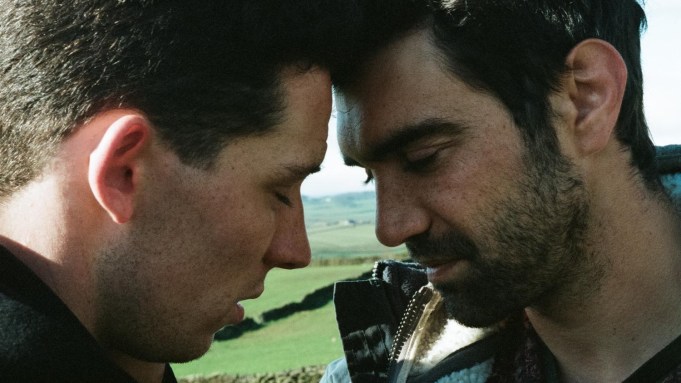
On God’s Own Country

God’s Own Country film still. 2017. Image via Orion Pictures.

By Harper Wellman

I have two unrevolutionary mantras in life. While the generic nature of mantras leaves them open to many applications and interpretations, the two ring clear now more than ever. 

The first is “This, too, shall pass.” I tell myself this whenever I find myself in an unwanted place or situation. The second, related or contradictory depending on your perspective, is “Life is cyclical.” Life has proven this to me time and time again, not just through physics but also through lived experiences. Everything will change, but we’ll also find ourselves in well-known situations. We might find ourselves surrounded by familiar people, going through habitual spaces, or maybe confronting an ongoing struggle. Simultaneously, events and experiences have changed our perspectives. 

These ideas are explored through the character development and themes in 2017’s God’s Own Country, written and directed by Francis Lee and starring Josh O’Connor and Alec Secareanu. Receiving rave reviews upon its release, aspects that could have been the downfall for the film work brilliantly well when combined, and the themes raised seem oddly apt for our current social climate. While we have been blessed with so much queer content during the pandemic (Priyanka for Prime Minister!), watching God’s Own Country prompted me to realize the cycles we all find ourselves in, and the one I was in on a micro level.

After years of having access to communities of my choice and my creation, public safety saw the shuttering of most gay bars, art galleries and museums, and isolation from friends and chosen family. Quite quickly, the communities I relied on were just as inaccessible as when I was shuttered in the closet. As I had done then, I turned to a familiar solution that had provided me with my first sense of queer community—the media.

This image has an empty alt attribute; its file name is Gods-Own-Country-1-1-1024x540.png
God’s Own Country film still. 2017. Image via Orion Pictures.

Growing up, I was lucky. White, cis-gendered gay men, like myself, were an easy way for companies to pinkwash their content without much thought or representation given to any of the intersections of our LGBTQ2+ community. I fell for it. There were Jake & Karen, the OG Fab Five, and side characters in teen movies or sitcoms. Then, just as I was entering middle school, I discovered Queer as Folk.  

The show, however problematic, rocked my world at the time. There were gay white people, living their gay white lives! The characters’ experiences were just as rich and complex as the lives of the Ally McBeal characters that I loved so much. I truly felt like I was seeing a representation of queer people like myself for the first time. Since, queer representation has expanded: Moonlight, Orange Is The New Black, and Special, to name a few, show that queer experiences are intersectional and dynamic. More people can see themselves represented in mainstream media, just as I had the privilege of having when I was younger. God’s Own Country is lacking in the diversity department but does offer a portrayal of white cis-male queerness that is unexpected and subverts many mainstream stereotypes.

The plot beats in God’s Own Country are relatively standard: A man, Johnny (O’Connor), struggles with society and familial expectations. Enter transient love interest Gheorghe (Secareanu). Initial resistance. Togetherness. Complication. Realization. This is a well-known dance.

At first glance, the formulaic story combined with heavy-handed metaphors and sometimes shaky cinematography shouldn’t work well, yet, these elements combine in a way that allows the character development to take center stage.

Our protagonist starts off drunk, racist, scared of intimacy and has a terrible relationship with his parents. By final credits, he has decided to drink less, loves the object of his racism (can we not?), and develops a better relationship with his family. These transformations are handled with subtlety and grace and a realistic sense of ambiguity. Johnny reaches for a beer but haunted by mistakes, decides against it. Do we get the sense that Johnny will never drink again? No, but we see the desire and effort of Johnny to be a better person. Similar evolutionary moments involve Johnny’s relationships with both his father and the farm animals, telling of Johnny’s gradual emotional growth.

Likewise, Johnny’s parents (played by Gemma Jones and Ian Hart) develop throughout the film. They grow to accept Johnny’s choice in Gheorghe as a partner as they see Johnny change for the better due to his company. Interestingly, neither parent is ever overtly homophobic in the film. If anything, they have more of a problem with Johnny’s drinking and lack of responsibility than his sexuality. Once again, this is a refreshing change in an onscreen adult/queer child relationship, especially in the development between Johnny and his father. By not focusing on such queer-specific moments, the space in the film is able to be filled with more interesting moments of their relationship; the intimate, universal, and relatable moments.

This image has an empty alt attribute; its file name is Gods-own-Country-3-1-1.jpg
God’s Own Country film still. 2017. Image via Orion Pictures.

Unfortunately, Gheorghe, the love interest, has the weakest arc in the film. He is kind from the start, and if anything, his kindness is disseminated throughout his new community and other characters. We learn little about his back story, and he seems, like so many pixie dream girls before him, there mostly for Johnny’s development. Gheorghe shines in one scene when he physically confronts Johnny over his racism. They get into a brawl, inevitably ending with thick sexual tension between the two. We can interpret Johnny’s racism as a tool for masking his attraction for Gheorghe. Still, it feels like the closeted playground bully attacking the proudly out kid, something that is not the case of Johnny’s white partners in the film. These racist tropes are a low point for the film and seem especially tiresome in 2020. 

With these shortcomings in mind, God’s Own Country still offers a refreshing representation of queer men. They filled few gay stereotypes (I could do without the promiscuity) but instead presented two capable and rugged men, riding quads, building fences, and helping birth animals. This type of representation was well-received in 2005’s Brokeback Mountain; however, what makes GOC’s portrayal refreshing, is that there is no struggle with sexuality. Yes, Johnny struggles with intimacy and societal expectations, but he is cocksure of his sexuality. Gheorghe, likewise, accepts his attractions to men. There is no cheating on women or even hiding their sexuality from the rural community, which works to undermine the long-held prejudice that members of the LGBTQ2S+ are inherently deceptive or untrustworthy. It also seems more accurate to outness today and how our community is fighting for all queer experiences to be recognized, not just those that appease our heteronormative overlords. For me, watching another coming out story on film is comparable to watching Batman’s origin story again on film: I’ll do it, but I’d like his relationship with Robin explored more.

Through the various characters’ development, some strong themes arise, directly reflecting issues many of us are facing today. Beyond the universal theme of unfulfilled parental expectations (especially true in LGBTQ2S+ communities), there is the theme of familial responsibility. While initially flippant about these responsibilities, as his father’s health descends, Johnny embraces his duty to care for his parents, both directly with physical assistance and indirectly by caring for their legacy, the family farm. We have realized a societal duty to protect our elderly during the ongoing pandemic, whatever form that may take, and embracing it sooner than later can help ease our older community members’ suffering.

The idea of stuckness was strong in the film as well, something we can all relate to during this pandemic holding pattern and as queer people. We may have felt stuck in the closet, in a town, or in a body. Even though Johnny initially feels stuck, his perspective is altered by embracing the unexpected changes life tosses at him. Through a new lens, Johnny can embrace the responsibilities that burdened him before. Each time we revisit a situation, we carry with us new tools and insights to better navigate the circumstances. As many of us find ourselves in unexpected cycles, whether that by living with parents or unemployment, at a time when major life changes seem on hold, it is worthwhile to focus on more immediate and tangible changes.

A final theme that spoke to our current situation is that of community. By the end of the film, Johnny has come out of an isolation of sorts by embracing what community is available to him—his family—while creating a new sense of community through his relationship with Gheorghe. This pandemic imposed isolation has prompted many of us to embrace what community we have and seek new ways of connecting. As queer people, we have been in this isolation before, but we have new tools, knowledge, and relationships to help us through this time. 

While Johnny’s cycles of stuckness, community and responsibility play out on a small scale, his journey in God’s Own Country speaks to a 2020 audience, perhaps more so than upon release in 2017, on a large scale. Pandemics, social uprisings, and volatile politics – we have been here before, and we’ll be here again. With each time around, however, we have the ability to better our actions and reactions and, hopefully, achieve something better than before.

And just remember, this, too, shall pass.

Dana Buzzee: The Coven on Her Back

016_PunishmentRituals_DanaBuzzee_LEFTContemporary
Punishment Rituals, installation view. Dana Buzzee. 2019. Size varies. Courtesy of the artist and LEFT Contemporary.

Punishment Rituals

LEFT Contemporary March 1-May 4, 2019

By Lucas Cabral

I walk in and I get a little excited. This excitement has been growing with every image the artist and LEFT Contemporary have posted of works and installation progress leading up to the opening. The imagery and energy are something I’ve been looking for (and missing) since I moved from my Toronto-adjacent hometown whose proximity to Toronto’s queer density granted me easy access to bondage and fetish communities and their meeting spaces. Is this excitement the effect of the spell cast by Buzzee’s work? Or is it evidence of my newfound curse?

Why not both?

The constellation of works making up Punishment Rituals forms a warm entanglement of community and queerdos spanning generations and geographies. Buzzee has inducted viewers, makers, participants, and their predecessors, materializing them in studded leather collars and cuffs, a wide-cast web woven of leather and chain, and prints retelling possible engagements of these or similar sculptural works, all of which in this space cast a circle around an a-frame and knot of nylon rope.

005_PunishmentRituals_DanaBuzzee_LEFTContemporary
Punishment Rituals, installation view. Dana Buzzee. 2019. Size varies. Courtesy of the artist and LEFT Contemporary.

Hand-pulled images of rope and leather-bound performers on newsprint reference and resurrect community-based erotica like that found in publications like On Our Backs, the first women-run erotica magazine that featured lesbian erotica for a lesbian audience. Images are captured when Buzzee opens calls for community members to perform freely with the leather works she makes. Groups, pairs, and strangers, bond over a shared bondage experience. Buzzee captures these moments of liberation, exploration, and connection, offering the images as a part of an incantation. Like with the previously mentioned On Our Backs publication, Buzzee continues a legacy of by-and-for community erotica. An exhibition poster with exhibition text by Taylor Harder has a likeness modeled after On Our Backs and chronicles the development of and differences between British and North American traditions, making note of the ways that intimacy is an activator during initiation.

The exhibition reclaims the formula of ritual witchcraft initiation ceremonies, making space for homoeroticism which is rejected by British traditions (heavily informed by the legalization of witchcraft preceding the legalization of homosexuality in Britain), and taking up traditional initiation elements like blindfolds, nudity, bondage, and whipping not adopted by North American traditions.[1] In Punishment Rituals, artwork takes the spot of coven members who typically circle the initiator and postulant during the ceremony. These stand-ins are embedded with the energy of those who have been a part of their making. Buzzee engages community members who are also artists, writers, printmakers, leatherworkers, arts administrators and peers in their production. With the intention of initiation being “spiritual rebirth into new identities and new communities,” Buzzee sets the stage for those possibilities to be impacted by queer-femme homoeroticism.

001_PunishmentRituals_DanaBuzzee_LEFTContemporary
Punishment Rituals, installation view. Dana Buzzee. 2019. 9′ by 9′. Courtesy of the artist and LEFT Contemporary.

The show, the space, and it’s making reflect the collective queer mobilization that’s taken up out of necessity to meet the needs of one’s community that aren’t satisfied or even acknowledged by the heteronormative structures that dominate our spaces. As we pay more attention to the disappearance and lack of queer spaces especially for femmes (even in bigger cities), it is important to celebrate the perseverance of those who dedicate their time and energy into producing space and opportunity for their community to gather and engage. In connecting community members with the knowledge, perseverance, and legacy of those before to produce the various elements of the show, Punishment Rituals penetrates communities past and present and binds them together through webs of leather, chain, intimacy, and possibility, creating an opportunity to find community and affirmation, and to reflect on the ongoing task of collective queer organizing and reclaiming.


[1] Harder, Taylor, Art Thou Willing to Suffer to Learn: An Analysis of Witchcraft Initiation Rituals, 2019.


Polyamory and Finding Solace in the Written Word

By Jamie Lee Arseneau

Hands_FemmeArtReview edit

Illustration by Tajliya Jamal


To be a pansexual polyamorous woman in a predominantly hetero-normative monogamous world truly is a peculiar experience. Despite my orientation and lifestyle feeling natural to me, I am often perceived by others as peculiar (in a society that does not always celebrate peculiarity). And yet, I know with confidence that I am worth celebrating.

There is a tension in the air when you share with someone that you are polyamorous. It can feel as though you are letting them in on a dirty little secret, something taboo, nearly sinful even. This experience is even more so evident when you share that not only are you non-monogamous, but also that your secondary partner is a female. It is like outing yourself twice, in two different ways, each and every time, with each and every person you share this with. It is exhausting.

And I catch myself sometimes; I wonder if I am feeling this tension because the person on the other end of the conversation is judging me or if it’s my own (conscious or subconscious) shame rearing its ugly head. Either way, this is problematic. If others are judging me, is that because many LGBTQ+ and non-monogamous people are closeted, not yet normalized in society, and underrepresented in art and in the media? If it is my internal shame arising, is that because, in many ways, I am still closeted and trying to fit my lifestyle into a mold that it does not align with?

In my personal life, I live quite openly. My friends, my family, and even my social media contacts now know that my husband and I are polyamorous. They also know that I have had additional long-term, meaningful relationships with women. Yet professionally and publicly, there are lines that I still do not cross.

I have always been adamant in not being openly affectionate with past boyfriends and girlfriends when they have visited me at work. I have yet to ever ask my seventy-six year old grandmother to bring both of my partners with me to Christmas dinner. In some cases these small (yet impactful) decisions are made out of wanting to avoid disapproving, tense, or overly personal conversations. In other instances, these decisions are made out of our respect for others, and the desire to not upset or bother anyone. Despite why they are made though, the end result is the same—I show up as my half self.

The issue about showing up as your half self is that this breeds shame. After years of platonic visits at the office and Christmas dinners spent missing and texting my absentee partner, shame has bred secrecy, self-doubt, isolation, anger, and a full spectrum of emotions that do not contribute to my overall wellbeing.

Writing…Writing has been my solace.

On the hard days where I feel that I do not and cannot fully express myself to the world, I vibrantly paint myself with ink on the pages of my journal. On the days where I am passionate and motivated to speak my truth, I stop procrastinating and create another chapter in my book that will one day share my journey with the world. And eventually, it will be my ability to wield the written word that will allow me to help others, like me, who feel closeted, not yet normalized in society, and underrepresented in art and in the media.

Writing has kept me sane. Writing has allowed me to express my pride. And one day, writing will allow me to support others. As I sit here pondering my final comments, I reflect upon how cathartic even writing this piece has been. Compared to when I first began, I feel light-hearted and cleansed in a way. For this, I am grateful.

I truly believe that when we allow ourselves the time needed to create, and the space to express our true selves, we align with our higher purpose and selves. And from this state of being, we can then begin to attract our people and feel accepted, interconnected, and loved.

And love—love is what this polyamorous woman is seeking in her life.